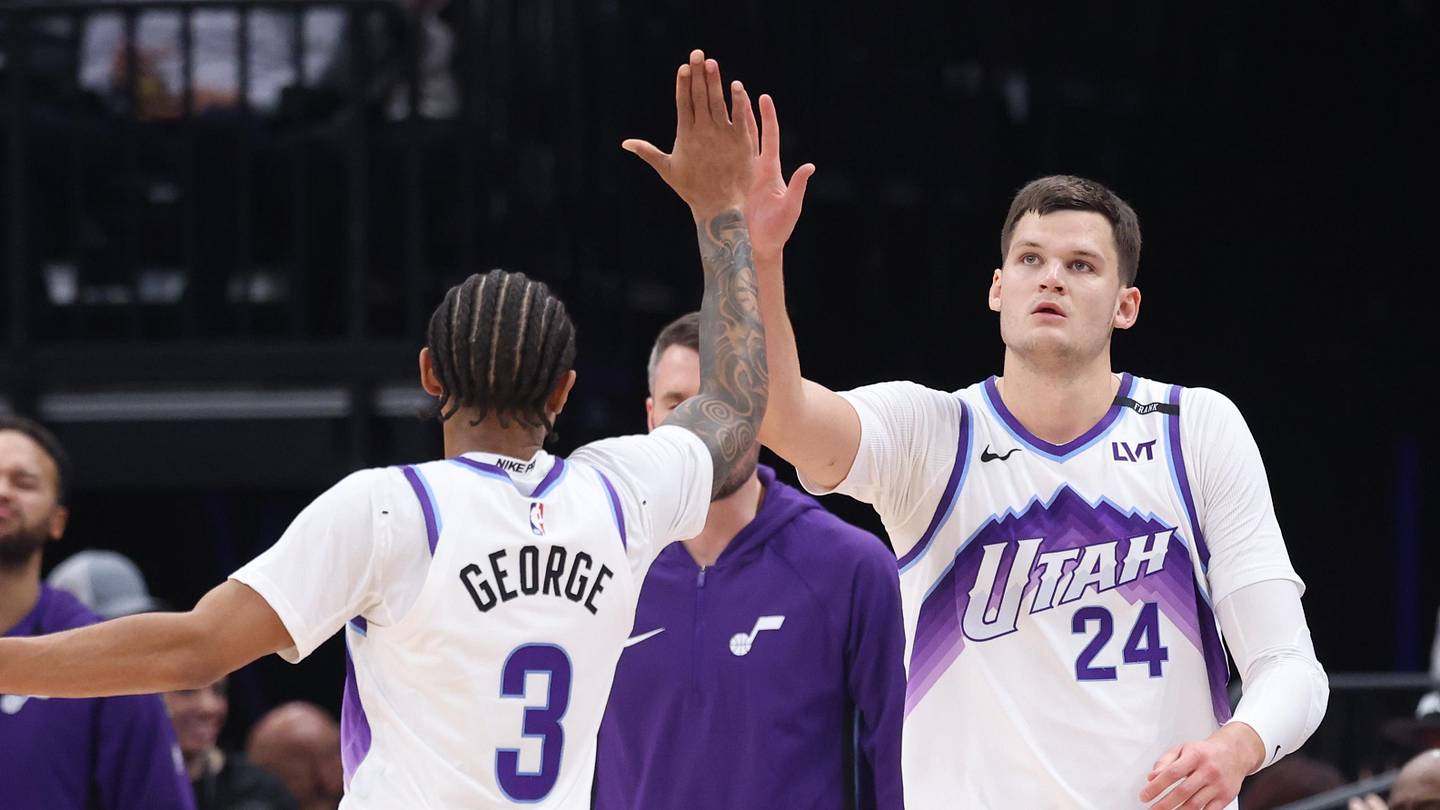
Walker Kessler has grown into the clearest on-court identity the Jazz have assembled since the rebuild started, yet contract discussions now arriving from Sports Illustrated place the front office in front of its first measurable decision about when that identity should begin delivering wins.
The complication rests on how any extension would sit alongside the remaining salary slots and cap holds. A number that climbs with Kessler's production would secure a rotation piece who changes spacing and rim protection for several seasons, but it would also shrink the room available to add complementary shooters or switchable wings without running into apron restrictions later. The Jazz have gathered young talent without establishing a firm competitive marker, and Kessler's presence supplies the defense with a steady vertical threat that lets perimeter defenders take more risks. Extending him at a figure that matches his recent output would commit meaningful future space before the group has identified its primary creators.
Lineup fit questions sharpen the tension in several directions at once. Keeping Kessler on a deal that rises with performance gives the team stability at center, yet it may require trading other young players to balance the books down the road. A lower starting figure keeps options open for additional rotation pieces, though it carries the chance that Kessler's side views the offer as understating his defensive value. What makes certain numbers uncomfortable is the direct link to timeline choices. A figure that places him among the higher-paid centers in his age group signals that the organization believes the current group can push toward contention within two or three seasons. That position would force sharper calls on which contracts to retain and which to move, since the cap math would leave fewer mid-level exceptions or trade exceptions on the table.
Fans split along those same lines when they argue the deal. One view treats any long-term commitment as the necessary anchor for a defense that already carries an identity. The other worries the number could outrun the supporting cast and push the competitive window further away. Both sides start from the same uncertainty about when the Jazz plan to stop collecting assets and begin filling specific roster gaps. The reported complication from Sports Illustrated therefore acts as an early test. It asks whether the front office sees Kessler's development as the piece that sets the pace for everything else or as one valuable element that still requires surrounding talent before the timeline can shift.
That distinction will shape how the next few summers play out in concrete ways. If the number stays modest enough to retain salary flexibility, the Jazz can continue addressing spacing and creation without immediate pressure. If talks move toward a higher range, the organization signals it is ready to define the group more permanently, even while questions linger about who will share the floor with Kessler in meaningful games. Roster-building logic adds another layer here because any extension above a certain threshold would create a large cap hold that limits the team's ability to use exceptions or absorb salary in trades. That constraint matters because the Jazz still lack consistent perimeter creation and floor spacing around their young core. Paying Kessler early could mean relying on future draft picks or player movement to fill those holes, rather than using open salary space in the short term.
The dilemma also touches how the team sequences its moves across multiple windows. A lower deal might allow the front office to pursue a veteran shooter or another wing defender this summer or next, preserving the chance to test the current young group in a more complete lineup. A higher number would lock in the center position and push the organization to find creation elsewhere, possibly through trades that involve other developing players. Either path carries risk. Overcommitting now could leave the roster inflexible if development stalls, while waiting too long could force a renegotiation under different market conditions.
Another angle emerges when considering trade value and how Kessler's presence affects the appeal of other young pieces. Teams evaluating Utah's assets often start with the center because his rim pressure creates defensive identity that can travel in a deal. Locking him in at a high number changes that calculation for potential partners, who might then see fewer avenues to acquire him without taking on additional salary. This in turn affects what the Jazz could realistically receive back if they ever decide to move him later. The same math applies in reverse when thinking about incoming players. A flexible deal leaves room to add salary in a trade without hitting the apron, while a larger extension reduces those options and forces the front office to prioritize different types of moves.
The outcome will not settle every roster question at once, but it will clarify whether Utah still treats this stretch as open-ended collection or as the moment when the timeline starts to tighten around concrete expectations. That choice will influence how fans measure progress in the seasons ahead.
 Utah Jazz