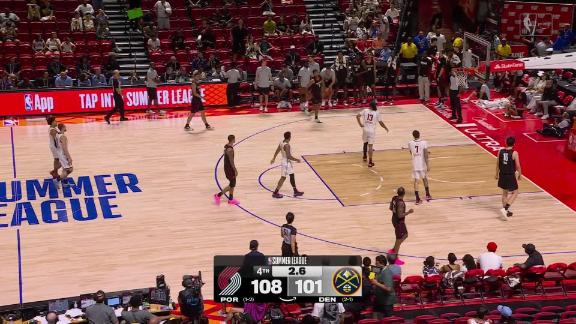
The Utah Jazz and Portland Trail Blazers met in a tightly contested Summer League game that highlighted the progress of both organizations' young cores. While the final score is noted in the original recap, the game itself offered a clear view of how each team is shaping its future roster through defensive discipline and spacing.
From the opening tip, both squads emphasized ball movement and the willingness to test multiple lineups. The Jazz rotated their big men early, allowing fresh legs to contest shots and secure rebounds, a strategy that kept the pace measured and prevented the typical high-scoring explosion seen in many Summer League contests. Portland, meanwhile, leaned heavily on perimeter shooting, a plan that produced bursts of offense but faltered when the ball left the arc cold.
Defensive intensity defined the matchup. The Jazz’s ability to convert defensive rebounds into second-chance points proved decisive, as each possession was contested with purpose. Portland’s wing prospects, tasked with generating open looks, struggled to find consistency, underscoring the need for further development in transition and off-ball movement. The contest remained within a narrow margin throughout, reinforcing the thin line that separates rebuilding teams in the early stages of player evaluation.
Both franchises view the Summer League as a laboratory for assessing draft assets and potential free-agent fits. Utah’s front office, known for a methodical, draft-centric approach, will likely interpret the performance as validation of its roster construction philosophy. Portland, still searching for a post-Lillard identity, can draw optimism from the competitive effort while recognizing the importance of addressing shooting variability and defensive cohesion.
Looking ahead, the next round of Summer League games provides each team an opportunity to solidify rotations before the upcoming NBA Draft. The Jazz will aim to maintain momentum against other developing squads, while the Blazers will seek to refine their offensive schemes and defensive sets. How the lessons from this encounter translate into summer training camps and eventual roster decisions will be a key factor in shaping both teams' trajectories for the upcoming regular season.