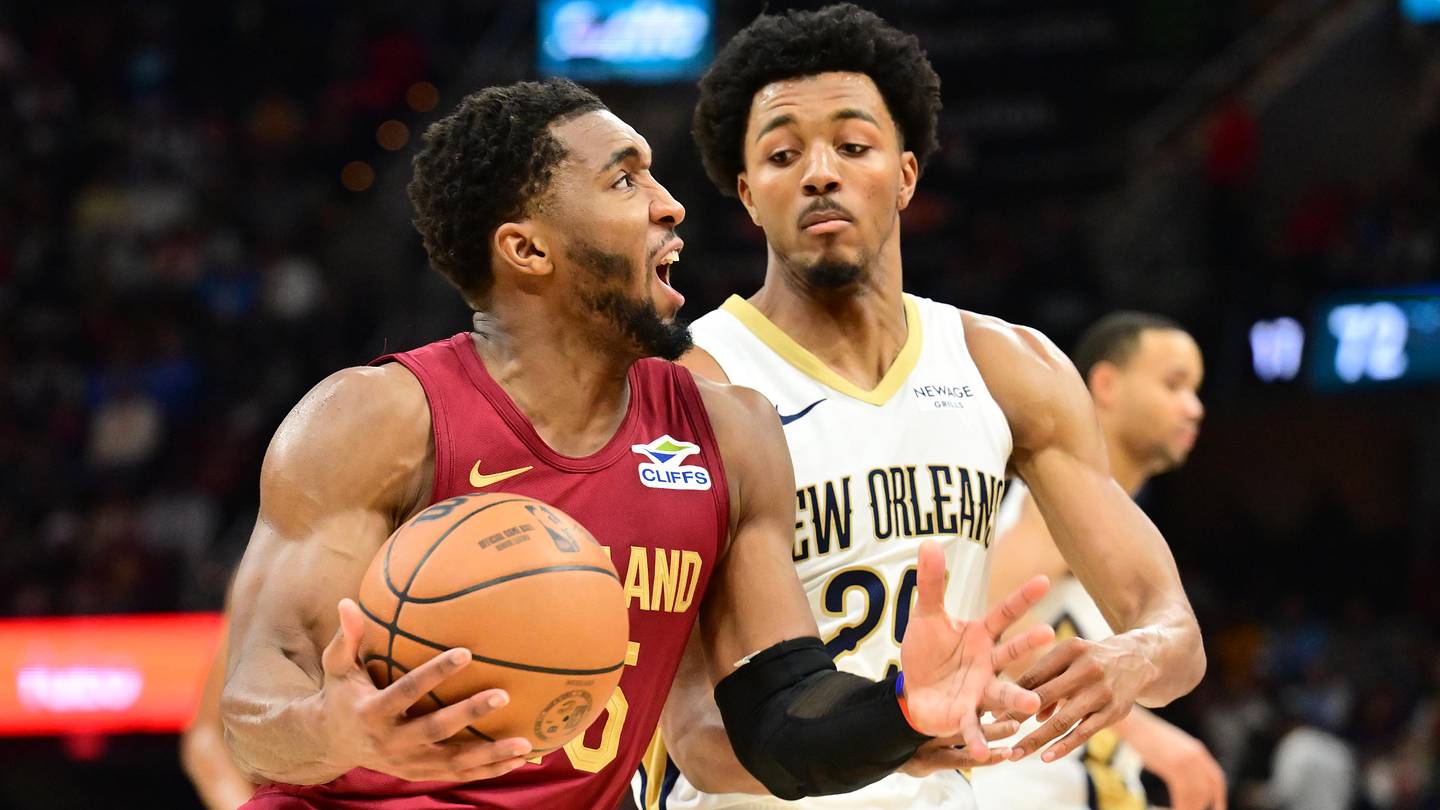
The Cleveland Cavaliers hold a late first-round pick but face a clear obstacle in any pursuit of New Orleans Pelicans forward Trey Murphy III. The Pelicans lack their own 2026 first-round selection after previously trading into the lottery for Derik Queen. New Orleans prefers established players who can contribute immediately rather than additional draft capital.
Murphy posted 21.5 points, 5.7 rebounds and 3.8 assists per game during the 2025-26 season while shooting 37.9 percent from three-point range. He operates as a 6-foot-8 wing who spaces the floor, attacks closeouts and provides switchable defense on the perimeter. Those numbers reflect a career-high scoring output built on volume three-point attempts and efficient finishing inside the arc.
Adding Murphy would give the Cavaliers a versatile forward who complements their existing core without clogging the paint. He thrives in motion offenses that generate catch-and-shoot opportunities off dribble handoffs and secondary actions. Cleveland's need for perimeter creation and wing defense becomes more acute after their Eastern Conference finals exit, where matchup problems on the wing limited their ability to close out series.
The Cavaliers added James Harden during the season to accelerate their contention window, yet that move did not produce a championship. New Orleans sits in a similar spot with Zion Williamson and Dejounte Murray under contract, pushing the franchise toward moves that strengthen the present roster rather than accumulate future assets. Rival teams have shown interest in Murphy precisely because his contract and skill set align with immediate rotation needs.
The Pelicans hold leverage heading into the draft. Any deal involving Murphy would likely require Cleveland to include rotation players or future picks that New Orleans views as more valuable than a late first-rounder. Cleveland must decide whether to explore alternative targets or restructure an offer that satisfies New Orleans' preference for proven contributors.
Murphy's two-way impact would reshape Cleveland's wing rotation, but only if the front office can bridge the gap between the Pelicans' timeline and their own available assets.

 Cleveland Cavaliers