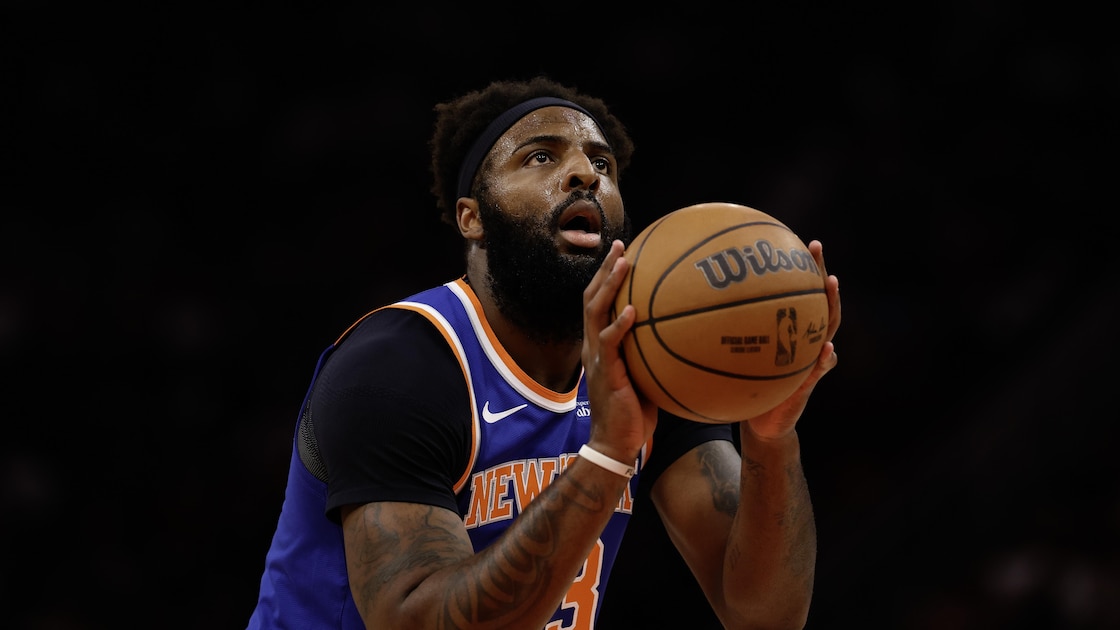
Mitchell Robinson arrived in Boston with a fresh contract, but his first public appearance on the team’s Instagram page turned into a pointed response to a fan who had taken aim at his free-throw shooting. The fan’s comment sparked a photo that Robinson posted, reminding the critic that he and his New York Knicks teammates had eliminated the Celtics in the second round of the most recent playoffs. By turning the criticism into a reminder of a recent playoff defeat, Robinson set a tone that blends confidence with a hint of rivalry.
The playoff series itself was a showcase for the way Boston tried to exploit Robinson’s known weakness at the line. The Celtics repeatedly fouled him, forcing him to shoot under pressure, and he finished the series with a free-throw percentage that hovered in the mid-forties. One particularly memorable moment came in Game 3, when an airball left him with four makes on twelve attempts. Despite the low shooting numbers, Robinson contributed solid rebounding numbers, pulling down eight boards on average while playing just over twenty minutes per game. Those rebounding contributions helped keep the Knicks competitive throughout the six-game series.
From a strategic standpoint, Robinson’s ability to secure rebounds in short bursts is precisely the skill set that attracted Boston in the offseason. The Celtics, looking to add interior toughness and second-chance opportunities, saw his size and timing as assets that could complement their existing front-court core. While his free-throw shooting remains a clear liability, the scarcity of true rim protectors in the league means that a player who can dominate the glass can still provide significant value, especially when paired with a strong defensive system.
Robinson’s public jab at the fan does more than settle a personal score; it signals a willingness to engage directly with the Celtics’ fan base. Social-media exchanges of this nature can amplify the intensity of an existing rivalry, especially when the teams have recently faced each other in a high-stakes series. By confronting criticism head-on, Robinson may be positioning himself as a personality who is unafraid to defend his performance, a trait that can endear him to supporters who appreciate confidence and accountability.
Looking ahead to training camp, Robinson faces a clear directive: improve his free-throw shooting while maintaining his rebounding intensity. Even modest gains at the line could transform him from a situational rebounder into a more versatile bench contributor capable of shifting momentum in close games. The Celtics will likely monitor his progress closely, weighing his offensive limitations against the continued upside of his interior presence.
In sum, Robinson’s response to a fan’s critique underscores both his competitive nature and the broader narrative of a player transitioning to a new team while still bearing the marks of past playoff battles. As the upcoming season unfolds, his development in the free-throw department and his consistency on the boards will determine how quickly he can win over the skeptical Boston crowd and solidify his role within the Celtics’ rotation.