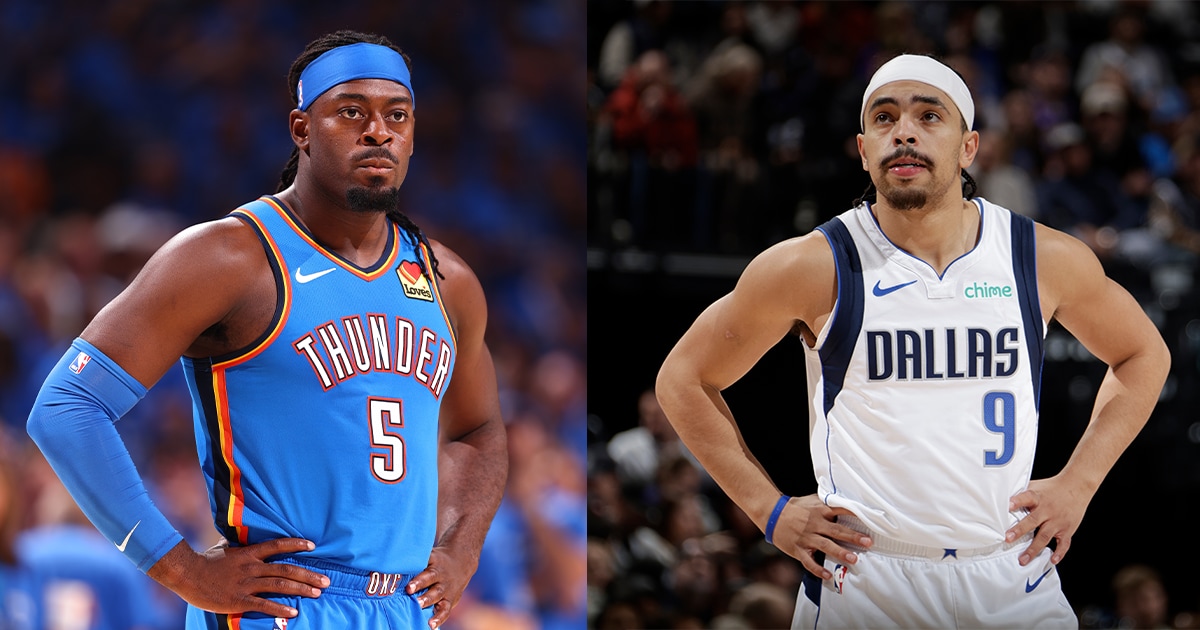
On Sunday the Atlanta Hawks, Oklahoma City Thunder and Dallas Mavericks completed a three-team trade that sent veteran wing Luguentz Dort and rookie guard Ryan Nembhard to Atlanta. Oklahoma City received a collection of second-round picks, while Dallas acquired former No. 1 overall pick Zaccharie Risacher. The transaction adds a proven perimeter defender to a Hawks roster that currently lists 17 players, two more than the league-mandated 15-man regular-season limit.
Because the Hawks are now over the roster limit, they will need to waive two contracts before the season begins. The decision will likely come after training camp when the coaching staff has a clearer picture of each player’s fit. While the trade does not introduce new salary-cap concerns, the roster squeeze forces the front office to prioritize depth and defensive potential.
Dort’s reputation as one of the league’s toughest wing defenders is the centerpiece of the acquisition. Pairing him with fellow defensive specialists Dyson Daniels and Nickeil Alexander-Walker expands Atlanta’s ability to rotate multiple lineups that can guard elite scorers without sacrificing length. Both Daniels and Alexander-Walker have shown the capacity to guard multiple positions, and Dort’s physicality should amplify the team’s on-ball pressure, especially in the second unit.
The move directly addresses a shortcoming exposed in the Hawks’ first-round series against the New York Knicks, where New York’s physical players such as OG Anunoby and Mitchell Robinson out-muscled Atlanta. Adding a player who thrives on contact aligns with the Hawks’ broader strategy of building a gritty identity under head coach Quin Snyder. The front office’s focus on defensive reinforcement rather than high-scoring talent signals a clear priority shift after the playoff exit.
It remains uncertain whether Dort will start immediately; the coaching staff has hinted he may begin in a bench role while they evaluate his fit alongside the existing rotation. If Dort can translate his defensive intensity into consistent perimeter coverage, he could earn a starting spot by late October. Ultimately, the trade’s success will be measured by how quickly Atlanta tightens its defensive metrics and whether the roster cuts preserve the depth needed to compete deeper in the postseason.