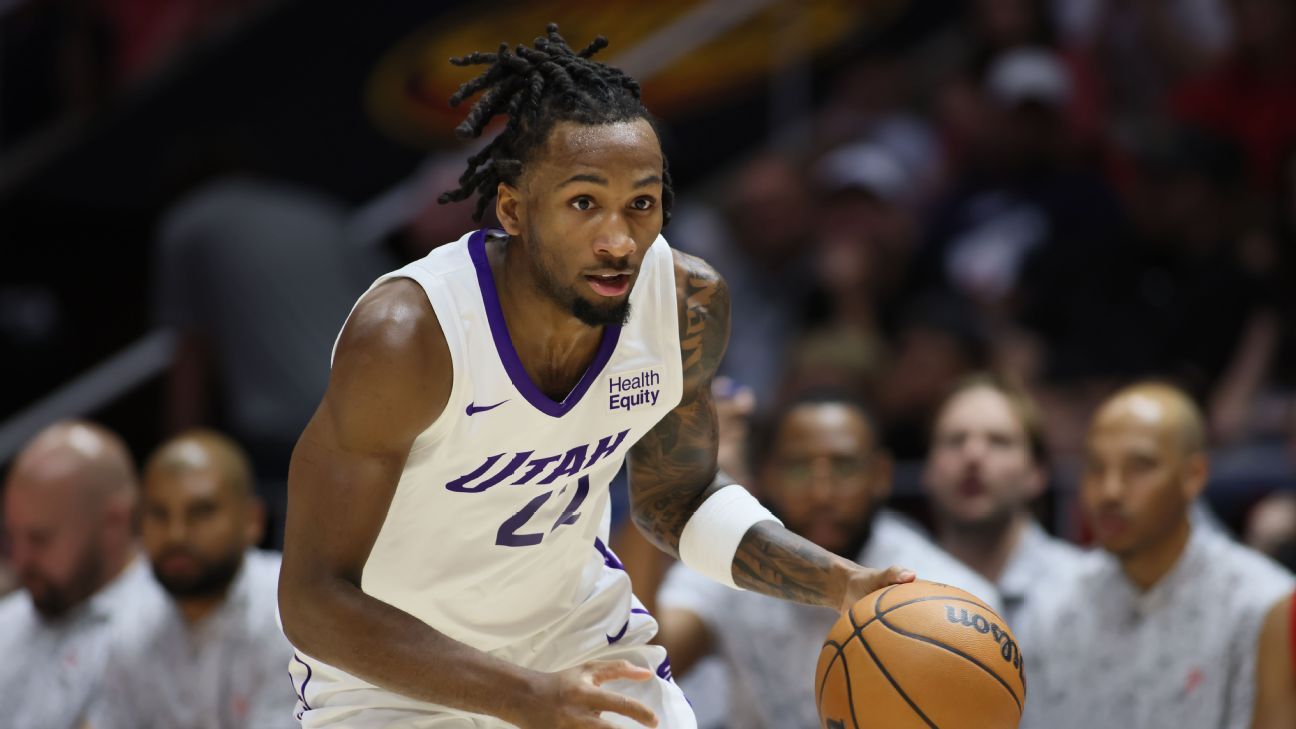
The Utah Jazz entered the upcoming season with the majority of their offseason checklist already checked off. They moved past the draft by selecting Darryn Peterson with a high draft selection, added several new faces through free agency, and resolved the Walker Kessler situation with a sign-and-trade that sent the center to the Los Angeles Lakers. Those moves have cleared the immediate roster questions, but one pivotal issue remains: whether the club will lock up budding guard Keyonte George before the league’s extension deadline.
Keyonte George is heading into the fourth and final year of his rookie contract after a breakout season that cemented his role as a core piece of Utah’s ascent. He has emerged as a critical contributor on both ends of the floor and has taken on a leadership role within the young core. Keeping him under contract would provide the continuity the Jazz have built around their recent success and would align with the organization’s pattern of securing promising talent early.
The Jazz’s front office has a history of extending young players who fit the team’s identity, and the decision on George follows that same philosophy. By addressing the Kessler trade, the club freed up cap space that could be used to negotiate a new deal without compromising the roster’s flexibility. The ability to move quickly on George would signal a commitment to internal development rather than a reliance on external free-agent options.
There is no guarantee that an extension will be reached this offseason. If talks stall, the Jazz could find themselves without a cornerstone guard heading into the next season, forcing them to explore the market for a replacement or to re-tool the backcourt. Conversely, a timely agreement would lock in a player who has already proven his value and would likely shape the team’s trajectory for several years.
Ultimately, the choice the Jazz make on George will serve as a litmus test for the franchise’s long-term vision. An extension would reaffirm a strategy built on continuity and home-grown talent, while a decision to walk away could indicate a willingness to gamble on market options. Whatever the outcome, the move will define Utah’s approach to competing in the Western Conference moving forward.