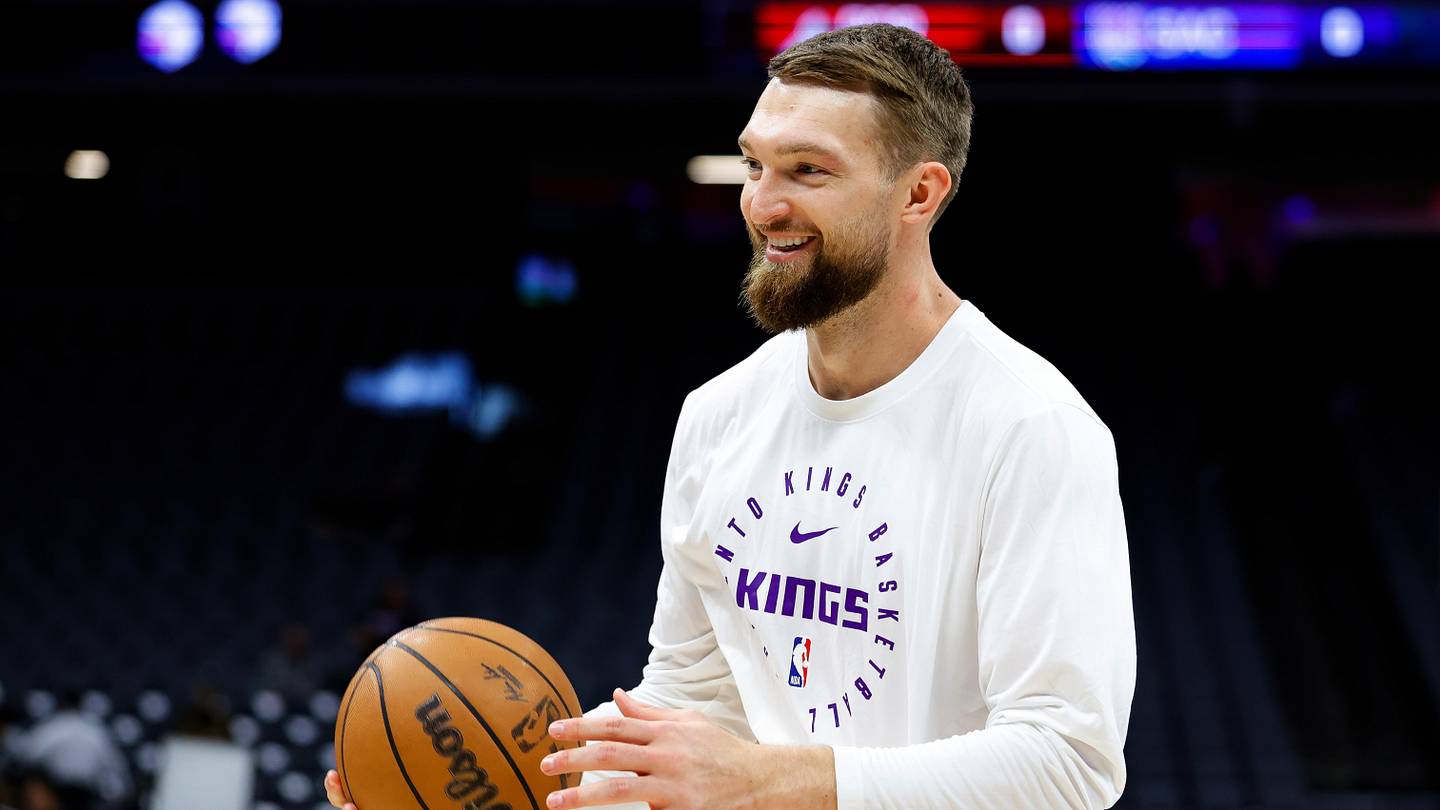
The Sacramento Kings appear poised for a significant strategic shift this summer. Whispers from the league suggest a front office eager to shed substantial payroll and move veteran pieces, signaling a potential full-scale rebuild.
This ambition creates a ripple effect across the NBA, as teams with different timelines and needs assess the available talent. The intricate dance of roster construction often begins with one team's desire for a new direction.
Such a move could see an impactful, albeit highly compensated, player like Zach LaVine become a central figure in trade discussions. While Sacramento aims to reallocate minutes and financial flexibility, the market for a player of LaVine's profile presents a unique challenge and opportunity. His substantial contract demands careful consideration from any potential suitor looking to integrate him into their rotation.
One Eastern Conference team, the Detroit Pistons, has emerged in recent reports as a potential landing spot for the All-Star guard, though their interest comes with layers of strategic qualification. According to NBA insider Marc Stein, the Pistons have a clear hierarchy of targets, placing LaVine further down their list. This nuanced approach highlights Detroit's specific needs and their calculated pursuit of roster upgrades.
Stein indicated that Detroit's primary focus would first be on a scenario involving Giannis Antetokounmpo, where they might join as a third team to acquire Tyler Herro. Should that complex multi-team maneuver prove unfeasible, the Pistons would then pivot to exploring other options.
Their preferred individual targets before considering LaVine include promising young talents such as Coby White and Isaiah Joe, alongside more established names like Kyrie Irving or Trey Murphy III.
It is only if none of these preferred acquisition pathways materialize that the Pistons would seriously consider LaVine. This sequence of priorities underscores the financial implications attached to LaVine's deal and the broader landscape of available talent. The Pistons are not simply seeking a scorer, but a specific piece that aligns with their future vision and current cap sheet.
The financial aspect of any potential LaVine trade is arguably the most significant hurdle. His current contract, valued at $48.967 million for the 2026-27 season , a figure Yahoo Sports notes as "his $48.9 million salary for next season" , positions him among the highest-paid guards in the league. For context, this amount would place him just behind Pistons' All-Star guard Cade Cunningham, whose salary is projected at $50.1 million.
Such a substantial salary demands elite production, yet LaVine's recent performance metrics paint a complicated picture. In the 2025-26 season, he averaged 19.2 points, 2.8 rebounds, and 2.3 assists per game, while connecting on 2.5 three-pointers at a 39% clip and shooting 47.9% from the field. These numbers, on their face, suggest a capable offensive player.
However, a deeper dive into advanced analytics reveals concerns. His Win Shares per 48 Minutes during that season registered at .051, a figure that stood out as one of the worst among regular starters. This particular metric, often used to gauge a player's overall contribution to team success, put LaVine in a category with players typically coming off the bench.
The comparison to players like Marcus Smart, Max Christie, Kyle Kuzma, and Dennis Schroder in this specific advanced statistic highlights the disparity between LaVine's salary and his perceived on-court impact. For a team like the Pistons, weighing the cost against the production becomes a critical exercise, especially when considering their long-term financial health and roster flexibility.
From Sacramento's vantage point, the motivation to move LaVine is clear and compelling. The Kings' front office would reportedly be "elated" to shed the final year of his sizable deal. This move would immediately free up a significant chunk of their payroll, offering unparalleled flexibility in future roster construction and potential free agency pursuits.
Furthermore, offloading LaVine would allow Sacramento to redistribute his considerable minutes to a cohort of younger players. This aligns directly with their rumored rebuild aspirations, providing valuable development opportunities for emerging talent without the pressure of a high-usage veteran taking a significant share of the offensive burden. It is a calculated step towards cultivating their next core.
For Detroit, the potential acquisition of LaVine, while not their first choice, carries a relatively low asset cost in terms of draft capital. Reports suggest that a trade would "likely cost Detroit nothing more than second-round picks and matching salaries." This minimal outgoing draft compensation makes the deal more palatable, even with the considerable financial commitment.
The Pistons, in this scenario, would primarily be absorbing LaVine's contract for one season. This short-term commitment reduces the long-term risk associated with his salary and injury history, allowing them to assess his fit and production without being tied to a multi-year deal. They would "only be on the hook for his salary for next season," providing a clear financial runway beyond that point.
For LaVine himself, a move to Detroit could be a "beneficial change of scenery." The opportunity to play for what the source describes as a "top contender in the Eastern Conference" , a significant designation for a developing Pistons team , could re-energize his career. Playing alongside a lead guard like Cade Cunningham might also allow LaVine to operate in a more defined scoring role, leveraging his shooting ability without the primary playmaking responsibilities.
The Pistons' motivation for pursuing LaVine, despite his contract and recent performance, lies in his inherent scoring ability. Detroit notably lacked an "additional scoring threat" during the NBA Playoffs, a deficiency that became evident in crucial moments. LaVine, even with his recent dip in efficiency, possesses the offensive firepower to alleviate some of that pressure and diversify their scoring options.
Integrating LaVine, even temporarily, could provide the Pistons with a veteran presence capable of generating points, particularly in half-court sets where their offense might stagnate. His ability to shoot from deep and attack the rim, when healthy, offers a different dimension. The challenge would be to optimize his role to maximize his strengths while minimizing the impact of his defensive shortcomings or inconsistent play.
The dance between a team desperate to reset its financial ledger and another seeking an immediate, albeit expensive, offensive boost creates a fascinating trade dynamic. Sacramento's desire for a youth movement and future flexibility clashes with Detroit's need for an established scorer, even if only for a single season's commitment. The leverage in such negotiations is always a delicate balance.
Ultimately, any trade involving Zach LaVine would represent a calculated risk for the Detroit Pistons, balancing his high salary and recent production against the low cost of acquisition and the potential for an immediate offensive injection. For the Sacramento Kings, it would be a decisive step into a new era, shedding a substantial cap hold to pave the way for a younger, more flexible roster.
The outcome will shape the trajectory of both franchises in the immediate future.
 Sacramento Kings