The pressure within the Los Angeles Lakers organization is a constant, unyielding force, demanding excellence from the top of the roster down to its furthest reaches. Every single addition, no matter how seemingly minor, is scrutinized through the lens of championship contention. This relentless pursuit of incremental advantage shapes every decision made by the front office.
In this environment, the two-way contract has emerged as a crucial instrument for teams aiming to blend immediate competitiveness with long-term talent cultivation. It represents a low-cost, high-upside gamble, allowing franchises to secure developing players without committing precious standard roster spots or significant cap resources. These deals are a testament to the ongoing evaluation process that defines the modern NBA.
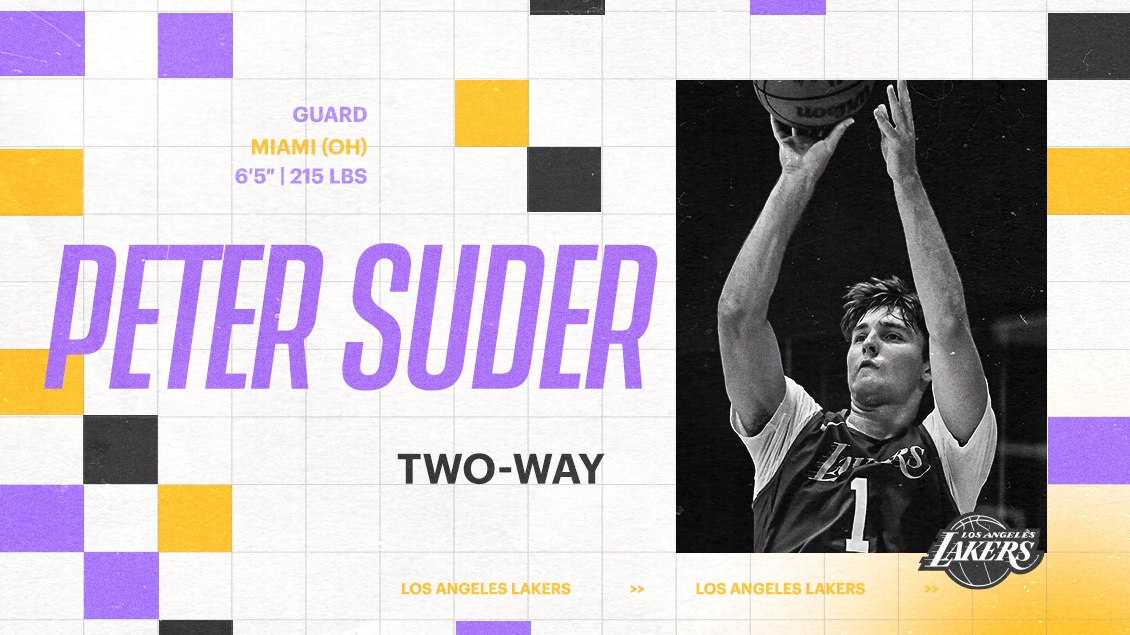
The Lakers recently made such a move, as NBA.com reported the team signed Peter Suder to a two-way contract. This transaction, while perhaps not generating the immediate buzz of a blockbuster trade or a major free-agent acquisition, speaks volumes about the detailed roster management employed by a club under constant win-now expectations. It reflects a strategic layer of talent acquisition.
For a team like the Lakers, boasting an established core of veteran stars, the challenge lies in finding complementary pieces and developing future assets without disrupting current chemistry or financial flexibility. Two-way contracts offer a precise solution, enabling the organization to scout and nurture players who might not yet be ready for a regular rotation role but possess intriguing potential.
They serve as a vital bridge between the G-League and the highest level of professional basketball.
These agreements allow a player to spend a limited number of days with the NBA club while primarily competing for its G-League affiliate. This structure provides invaluable professional exposure, coaching, and resources that accelerate development far beyond what typical collegiate or international leagues can offer. It's an extended audition, with both parties assessing fit and growth.
The Lakers' decision to bring in Peter Suder on such a deal underscores their ongoing commitment to exploring every avenue for roster optimization. It’s a recognition that even the deepest rosters require continuous infusions of potential, especially when managing the cap holds and salary slots inherent to a contending team. The margins often dictate the difference between good and great.
From Suder's perspective, this signing is an undeniable opportunity, a foot in the door to the most competitive basketball league in the world. The path ahead, however, is anything but guaranteed. It demands relentless work, an acute understanding of the team's schemes, and the ability to consistently perform under the intense scrutiny that comes with wearing the Lakers uniform.
He will likely spend significant time developing his game with the Lakers' G-League affiliate, honing skills, adapting to the professional pace, and demonstrating his capacity to execute at an NBA level. The transition from college or international play to the G-League, and then potentially to the NBA, is steep, requiring resilience and adaptability. Every minute on the court, whether in practice or in games, becomes a proving ground.
The G-League, often seen as a proving ground, is a league where raw talent meets professional demands. Players must show not only individual brilliance but also a foundational understanding of team concepts, spacing, and defensive assignments. For Suder, impressing the coaching staff and front office will involve consistent effort and measurable improvement in these areas.
The presence of a player like Suder, even on a two-way deal, adds a layer of internal competition within the Lakers' ecosystem. His development journey creates a tangible benchmark for other prospects and provides the coaching staff with more options, should injuries or performance dips necessitate a call-up. This constant churn at the bottom of the roster keeps everyone engaged and pushing for improvement.
Teams with championship aspirations simply cannot afford to have static rosters, even if the primary rotation appears settled. The nature of an 82-game season, coupled with the inherent unpredictability of player performance and health, demands a flexible approach to depth. Two-way players provide this essential flexibility, offering immediate availability without long-term commitments.
The evaluation process for two-way players is rigorous and ongoing. Front office personnel and scouts closely monitor G-League statistics, film, and coaching reports, looking for signs of progress, specific skill development, and overall lineup fit. The goal is to identify players who can eventually contribute to rim pressure, defensive versatility, or crucial floor spacing for the main roster.
The stakes for Suder are clear: leverage this opportunity to earn a standard NBA contract, either with the Lakers or another franchise. The journey from a two-way deal to a solidified NBA role is a testament to perseverance and consistent growth, a path successfully navigated by numerous players who are now significant contributors across the league. It requires a singular focus on improvement.
The Lakers, in turn, are making an investment in potential. While the immediate impact of Peter Suder on the main roster may be minimal, the strategic value lies in his potential future contribution or even as a minor trade asset down the line. Every player on the payroll, regardless of contract status, is a piece in the complex puzzle of team building.
This signing is not merely about filling a roster spot; it's about continuously refreshing the talent pipeline and ensuring the organization has options for every conceivable scenario. The fan stakes for a team like the Lakers are always high, and every move, big or small, is aimed at sustaining a culture of winning. It speaks to the meticulous detail involved in constructing a contender.
Ultimately, the addition of Peter Suder on a two-way contract represents another calculated step in the Lakers' relentless pursuit of another championship banner. It is a reminder that success in the NBA is built not just on the brilliance of its stars, but also on the shrewd management of its margins, constantly seeking an edge in talent, depth, and strategic flexibility.
 Los Angeles Lakers