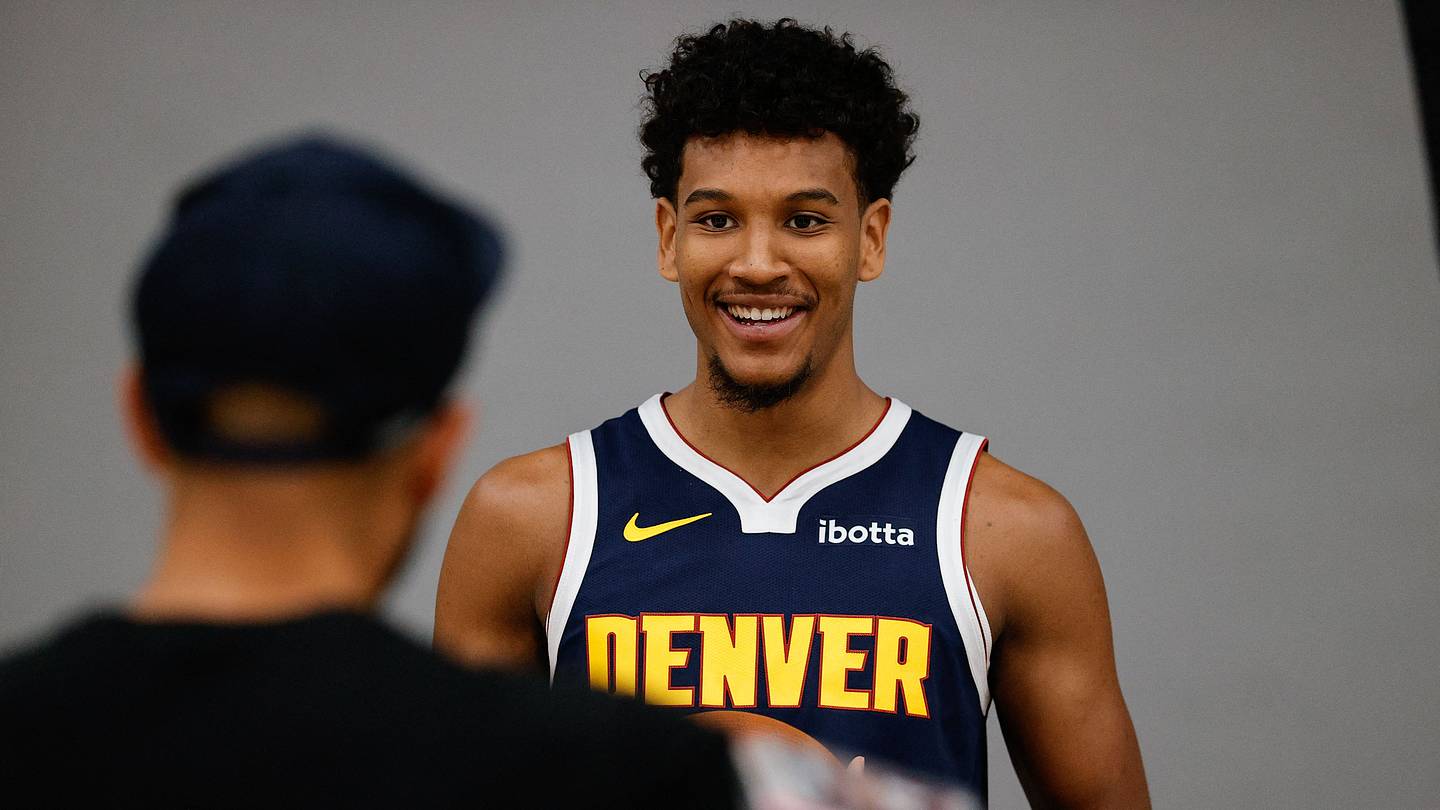
The Denver Nuggets appear ready to move on from two-way guard Curtis Jones after his rookie campaign, and the Boston Celtics have signaled interest in adding him to their roster. Jones will become a free agent when the free-agency clock opens, giving him the opportunity to explore options beyond Denver.
Denver’s offseason activity has been modest. The team re-signed point guard Tyus Jones, added forward Marvin Bagley, and saw wing Tim Hardaway Jr. depart for the Miami Heat. Those moves left the Nuggets with only a single two-way contract in place heading into the new season, a third-year deal for guard K.J. Simpson. With limited two-way slots and a deep guard rotation, the organization seems inclined to let Jones test free agency.
Two-way contracts in the NBA are constrained by a limited number of days that a player can spend with the parent club, and they count against the salary cap at a reduced rate. Because each team can carry only a handful of such deals, clubs must be selective about which developmental players they retain. Curtis Jones, having spent his first year on a two-way contract, will now be free to explore other opportunities, and the Nuggets’ roster composition suggests little room to keep him.
The Celtics, meanwhile, have been active in the two-way market and are looking to bolster depth on the bench. A defensive-oriented wing like Jones fits the profile of a low-risk addition that can provide flexibility without a significant cap hit. Boston’s interest aligns with their recent strategy of acquiring versatile, cost-controlled players who can contribute in limited minutes.
If the Celtics follow through, Jones could sign a new two-way contract or possibly a minimum-scale NBA deal, depending on how the team balances roster flexibility and salary-cap considerations. Denver is likely to finalize its two-way roster in early July, confirming Simpson’s third-year deal while leaving the Curtis Jones slot open.
This situation underscores how two-way contracts serve as a barometer for a franchise’s developmental priorities. For Denver, the decision reflects a focus on retaining proven talent and managing limited developmental slots. For Boston, the pursuit of Jones illustrates an aggressive approach to building depth and adding potential upside without major financial commitment.
 Denver Nuggets
