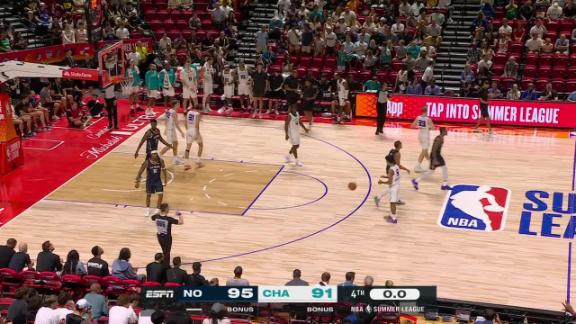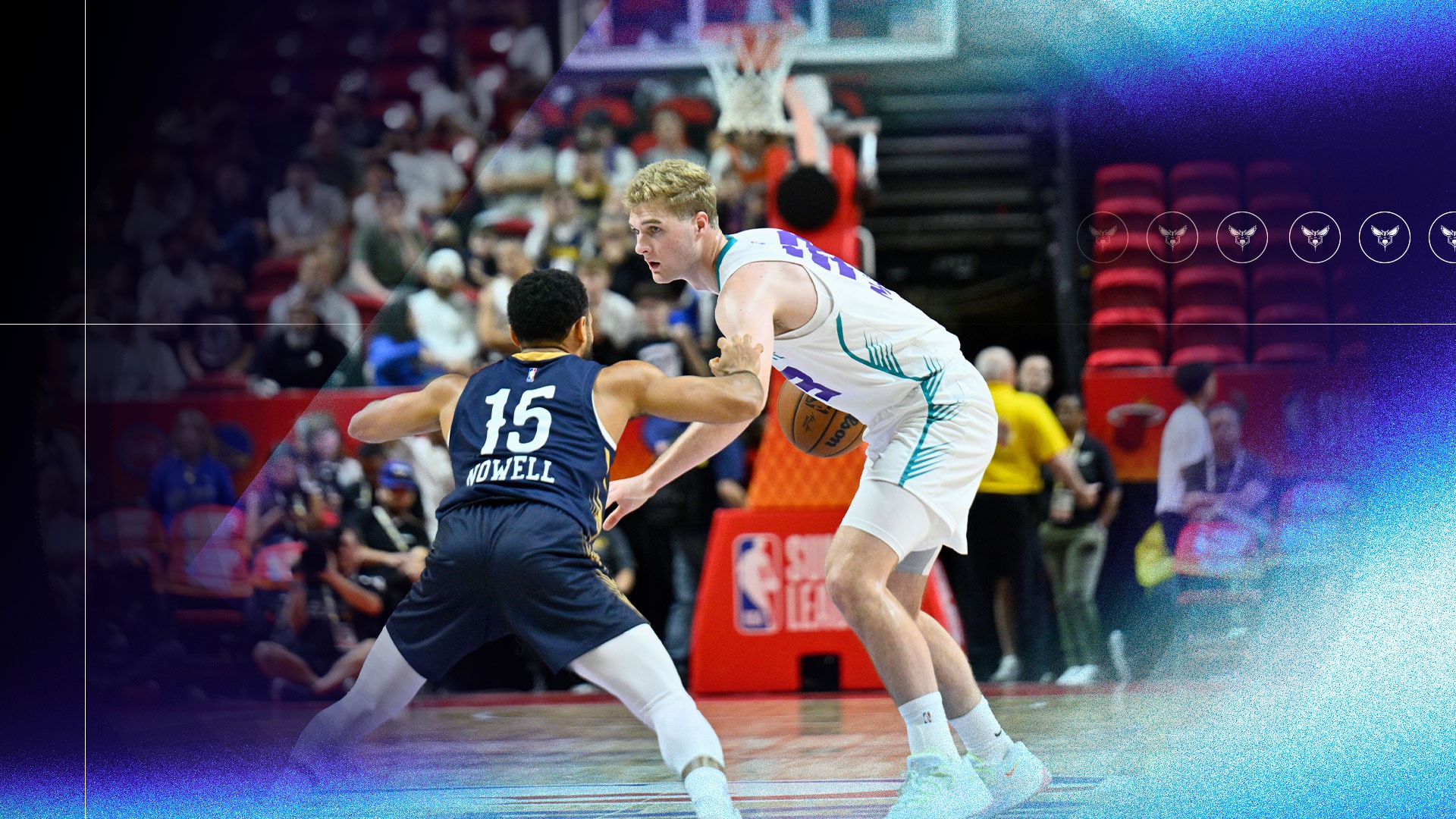
The NBA Summer League opened with a matchup that pitted the Charlotte Hornets against the New Orleans Pelicans. The Hornets entered the game with a perfect record, having won every game they played in the showcase so far. The Pelicans, looking to build momentum early, stayed within striking distance through the first three quarters before delivering a decisive push in the final period.
The contest remained tightly contested for the first three quarters. Both teams exchanged baskets, and each side showcased the offensive principles they hope to carry into the regular season. Charlotte’s ball movement produced clean looks, while New Orleans emphasized spacing and transition opportunities. The back-and-forth nature of the game highlighted the competitive balance typical of early summer league action.
When the fourth quarter began, the Hornets’ defensive rhythm faltered. Defensive rotations slowed, and gaps appeared near the rim, allowing the Pelicans to generate high-percentage opportunities. The Pelicans exploited these openings with a series of drives and finishes that quickly widened the gap. Charlotte was unable to stem the tide, and the momentum shift proved decisive, culminating in a Hornets loss that snapped their unbeaten streak.
The outcome carries immediate implications for both clubs. For Charlotte, the defeat underscores the need to refine defensive communication and adjust quickly when momentum changes. The loss serves as a reminder that even a well-executed system can unravel without disciplined perimeter defense. New Orleans, meanwhile, can view the fourth-quarter performance as validation of its emphasis on pace and interior presence, gaining confidence that its young core can execute under pressure.
Looking ahead, the Hornets have another summer-league opponent later this week, offering a chance to rebound and test any defensive tweaks introduced after the Pelicans game. The Pelicans will return to the floor in the next round of matchups, where they can continue to refine the late-quarter strategies that proved effective. Both teams will use the remaining games to evaluate roster pieces, assess player development, and shape the strategic direction of their respective rebuilding projects.
Summer league remains a vital laboratory for coaches and front offices, allowing them to observe how concepts translate to live competition. While the Hornets’ streak ended, the experience provides valuable data on where adjustments are needed. The Pelicans’ surge, on the other hand, reinforces a blueprint that could influence their approach once the regular season begins.