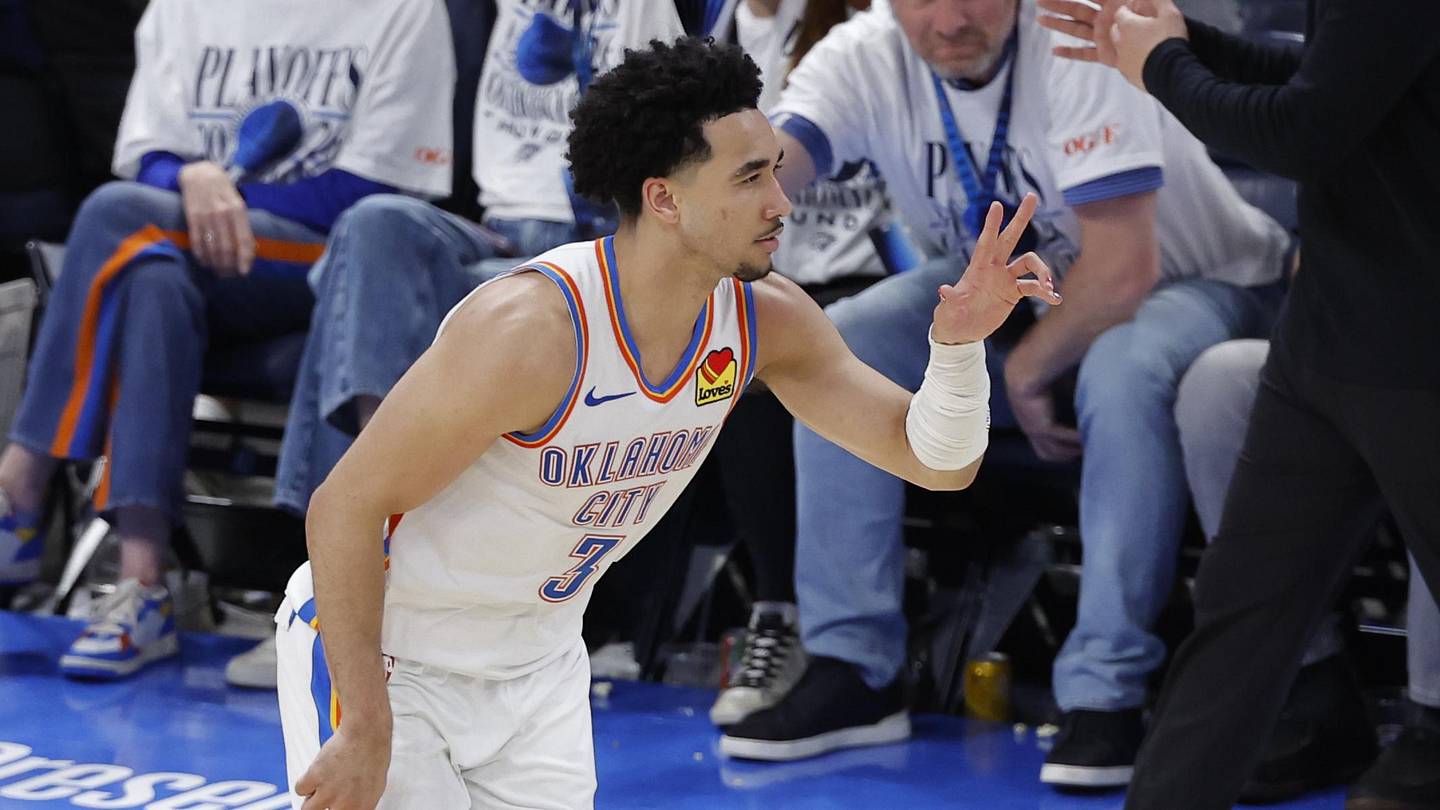
The Oklahoma City Thunder moved swingman Aaron Wiggins to the Atlanta Hawks on Sunday night, receiving two second-round picks in return. The exchange clears a roster spot, pushes the franchise out of the league’s second apron and adds to the draft capital the front office has been accumulating.
With Wiggins gone, the backcourt opens up for two of the team’s most promising young guards, Ajay Mitchell and Jared McCain. Mitchell posted a 13.6-point average during the regular season and raised his output to 15.1 points per game in the postseason, emerging as the club’s second-leading scorer when the playoffs began.
McCain entered the Thunder’s lineup at the trade deadline after being acquired from Philadelphia. Since his arrival he has been described as a sparkplug for the squad, providing a burst of energy that helped Oklahoma City secure key victories late in the year. The trade has freed minutes that can be applied directly to his development and to Mitchell’s continued growth.
Both guards still sit behind the team’s established stars, Shai Gilgeous-Alexander and Jalen Williams, so playing time remains at a premium. The Thunder’s coaching staff will need to balance the desire to protect the development of Mitchell and McCain with the reality of a limited rotation, especially as the team seeks to maintain competitiveness while remaining under the second apron.
The transaction fits a broader pattern for Oklahoma City: the front office consistently uses draft picks and flexible cap space to build a sustainable contender. By staying clear of the second apron, the Thunder preserve financial flexibility for future moves while continuing to stockpile assets that can be leveraged in later trades.
Looking ahead, the first two months of the regular season will be the testing ground for Mitchell and McCain in expanded roles. Their ability to sustain scoring efficiency and contribute on defense will determine whether they become permanent fixtures in the rotation or remain situational pieces. If they can translate their flashes of brilliance into consistent production, the Wiggins trade could be seen as a catalyst for long-term growth rather than a simple roster shuffle.
 Oklahoma City Thunder
