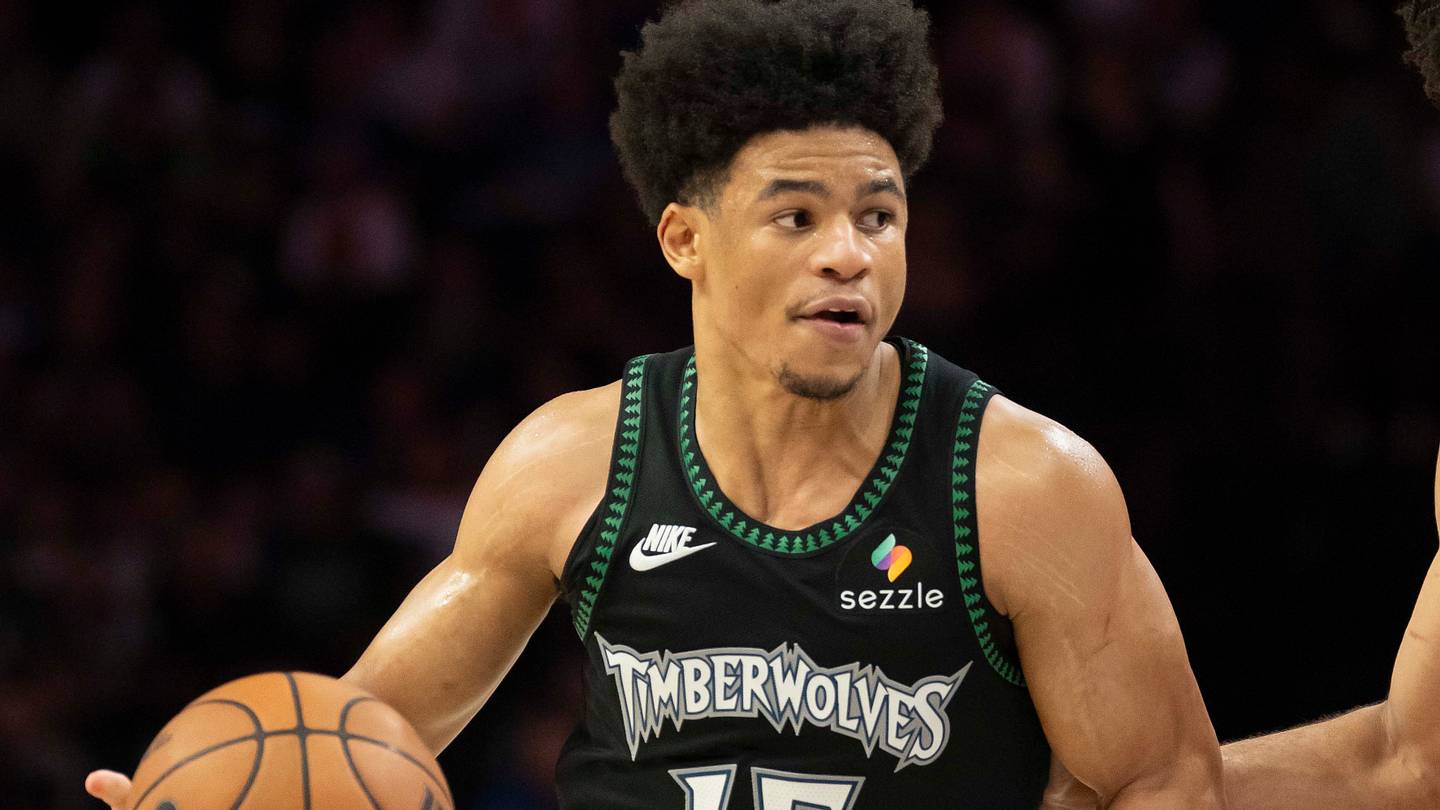
The Minnesota Timberwolves officially added LaMelo Ball and Josh Green to the roster on Tuesday, completing a deal that sent power forwards Naz Reid and Julius Randle out the door. Ball arrives as an All-Star point guard to share the backcourt with Anthony Edwards, while the front-court loses two established contributors and a cache of draft capital.
Because the outgoing contracts were bundled with the incoming ones, the Wolves now sit less than $4 million below the league’s second-apron threshold. With 13 players on the roster, that second-apron space represents the absolute ceiling on salary spending for the remainder of the offseason. The league’s veteran minimum sits at $2.4 million, which defines the cheapest contract the team can use to meet the NBA’s 14-player minimum.
The trade resolves a long-standing vacancy at point guard, but it creates an immediate depth problem in the frontcourt. Without Reid and Randle, the Wolves have shed a sizable amount of guaranteed front-court salaries. The remaining interior pieces, Karl-Anthony Towns, Rudy Gobert, and a handful of role players, will need to shoulder a larger load, limiting rotational flexibility and the ability to match up against teams that field multiple big men.
Before the regular season tip-off, Minnesota must add at least one player to reach the 14-man roster minimum. The most straightforward solution is to sign a veteran to the $2.4 million minimum contract, thereby using the small amount of cap space that remains under the second apron.
A more aggressive alternative would be to move Josh Green’s $14.7 million salary. However, the Wolves have exhausted their draft assets, leaving little leverage to entice another franchise to absorb that contract. Without a willing trade partner, the team is likely to enter training camp with a thin bench, relying on low-cost signings rather than a major roster overhaul.
The coming weeks will reveal whether Minnesota opts for a low-cost veteran addition, engineers a creative trade to shed Green’s salary, or simply operates with reduced front-court depth as the season begins.