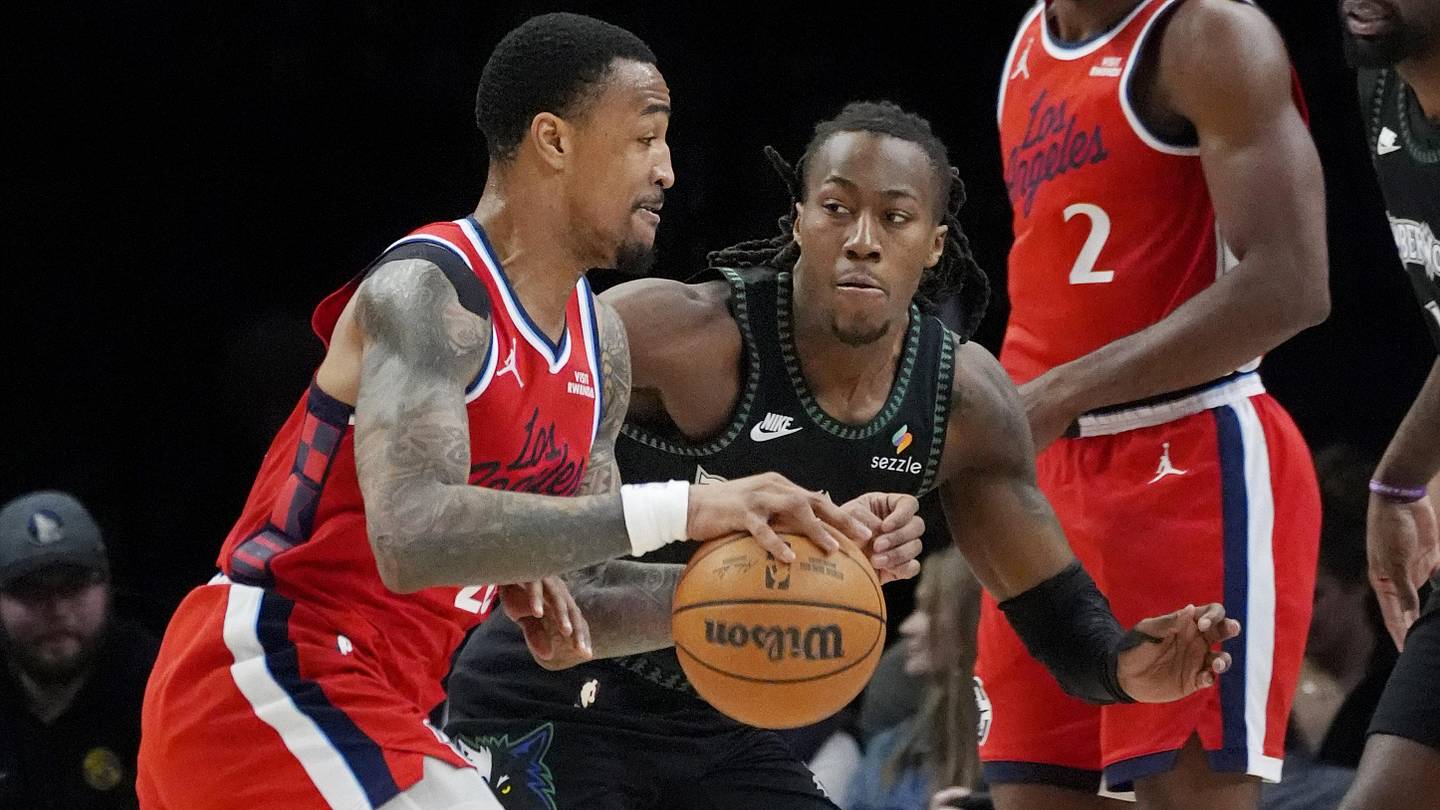
The Timberwolves view John Collins as the right power forward to replace the production lost in trades of Julius Randle and Naz Reid. Collins enters free agency after completing a five-year, $125 million contract and turns 29 in September. Multiple teams share Minnesota's view of the nine-year veteran, yet the club's salary cap position leaves little realistic path to a deal.
Collins has delivered career averages of 15.7 points and 7.7 rebounds while shooting 37 percent from three-point range. Over the last two seasons he has raised his accuracy above 40 percent on 3.4 attempts per game. Those figures show a forward who spaces the floor, finishes inside, and grabs boards without demanding the ball constantly.
Collins would start at the four and stretch defenses enough to open driving lanes for the backcourt. His interior scoring and rebounding add physicality without requiring elite rim protection. Defensively he holds his own in team schemes but rarely creates turnovers or blocks, so the Timberwolves would lean on their existing personnel to cover those gaps.
The recent frontcourt trades left Minnesota short at a position that demands both spacing and size. Collins fits that description cleanly as a modern four who can shoot 40 percent from deep while still crashing the glass at a high level. Other interested clubs could push his market into territory the Wolves cannot reach without offloading additional salary.
Free agency forces Minnesota to decide quickly on its remaining flexibility after dealing away two key frontcourt pieces. The club could explore sign-and-trades or minimum deals if Collins' price stays elevated around the midlevel exception or higher. Those choices will determine whether the roster adds a proven starter who has averaged nearly 16 points per game for his career or shifts toward smaller lineups for the coming season.
Minnesota's backcourt stars need a four who can both punish smaller defenders on the block and pull bigger ones away from the rim on the perimeter. Collins has shown that two-way versatility across nine NBA seasons, including strong rebounding rates that would help replace the lost presence of Randle and Reid. Yet the hard salary cap reality means the Timberwolves must weigh his fit against more affordable options who might not match his shooting or scoring punch off the bench or in the starting five.
 Minnesota Timberwolves