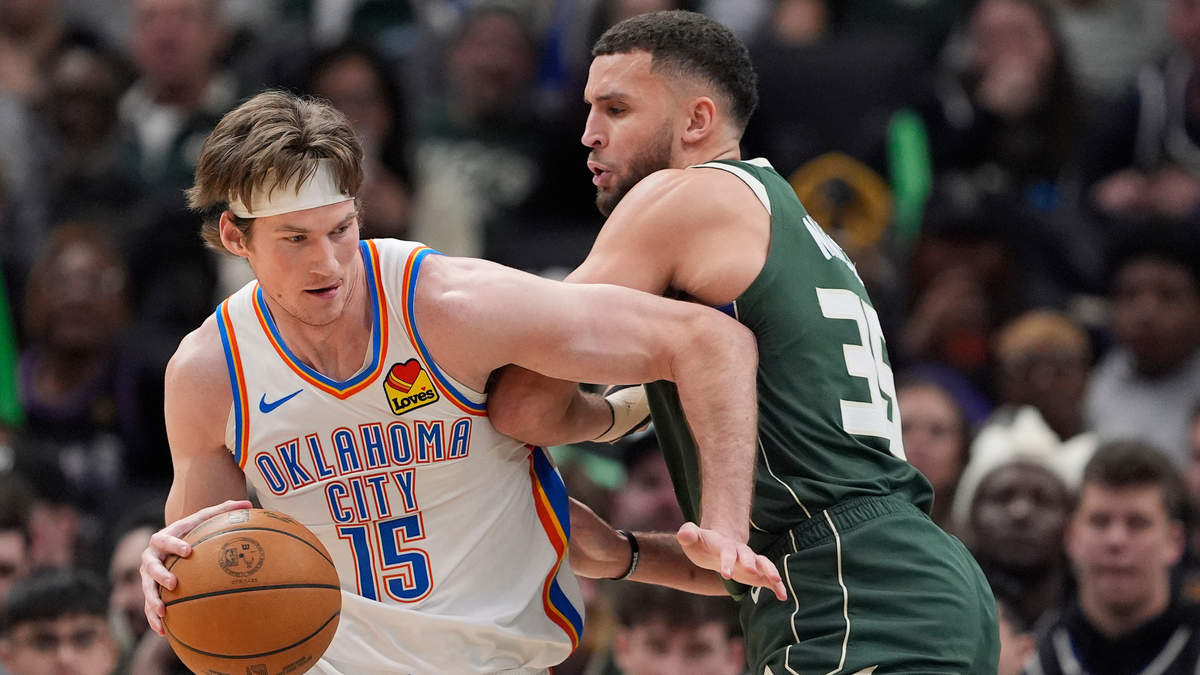
Portland announced the signing of Branden Carlson, a former two-way player who spent the last two years with the Oklahoma City Thunder organization. The addition gives the Trail Blazers a seasoned big man to bolster the center position and adds a layer of insurance for a frontcourt that has often been thin.
Two-way contracts allow players to split time between an NBA roster and its G League affiliate while earning a salary that reflects the dual status. Carlson’s experience under that arrangement means he has been exposed to NBA-level practices, defensive coaching, and the rigors of professional rebounding. Those habits translate into a player who can step into the Blazers’ rotation with a clear understanding of spacing, positioning, and rim protection.
Standing around seven feet tall and shooting right-handed, Carlson offers the size and reach that Portland’s defensive schemes value. A drop-cover system that emphasizes interior presence benefits from a big who can hold his ground against pick-and-roll actions and deter opponents from attacking the paint. While he is not expected to be a primary scoring option, his ability to finish around the rim and set solid screens provides the kind of versatile, low-risk contribution coaches seek from bench players.
The signing fits a broader roster strategy the Blazers have employed this offseason: leveraging short-term deals and two-way contracts to fill roster holes while preserving salary-cap flexibility. By targeting players who have already operated within professional systems, Portland can integrate them quickly and evaluate their impact without long-term financial commitments. This approach mirrors the tactics of many small-market teams that prioritize depth and development over large, guaranteed contracts.
Carlson will join the team for the upcoming preseason, where his defensive work ethic and rebounding will be tested against the existing centers. If he demonstrates consistent rim protection and reliable minutes, he could earn a regular spot in the rotation, especially during stretches that demand additional rest for the starters. His presence offers the Blazers a pragmatic option to improve interior defense, a factor that could prove decisive as the Western Conference tightens and playoff positioning becomes increasingly contested.
Overall, the move underscores Portland’s commitment to pragmatic roster construction. By adding a player familiar with the two-way model and equipped with the physical tools to compete at the NBA level, the Trail Blazers aim to shore up their interior while maintaining the flexibility needed to adapt to the season’s inevitable challenges.
 Portland Trail Blazers