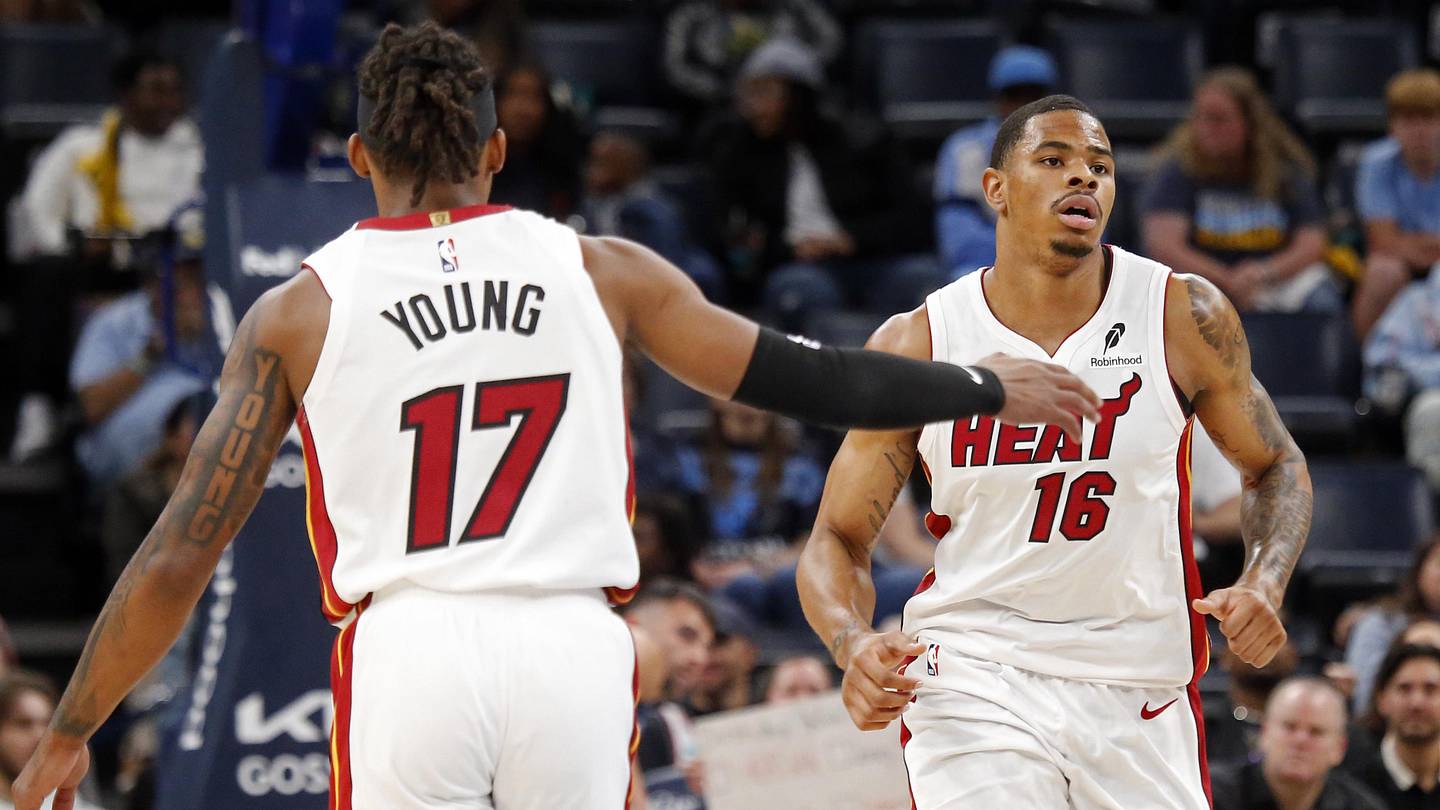
The Miami Heat have chosen not to exercise the team option on guard Jahmir Young, a move that removes a modest financial commitment from their upcoming roster calculations. The decision was announced as part of the team's offseason roster adjustments, and it reflects the organization’s ongoing effort to balance talent acquisition with salary-cap flexibility. By declining the option, the Heat preserve the ability to re-sign Young on a more flexible arrangement or to allocate resources elsewhere.
Young arrived in Miami after being signed on an Exhibit contract during the previous offseason. He earned a two-way deal before the season began and was later promoted to a standard NBA contract, a progression that underscores his work ethic and the club’s willingness to reward performance. In the G League, Young distinguished himself with a high-energy style of play that earned league honors, and he contributed off the bench during his limited NBA appearances. His versatility and defensive intensity made him a valuable depth piece, even if a consistent role never fully materialized.
The Heat’s broader strategy centers on uncovering undervalued talent in the undrafted free-agent market, a philosophy that has yielded several recent two-way signings. Alongside Young, the organization added a standout guard from the University of Miami and another promising guard from South Carolina, both of whom have secured two-way contracts that allow the club to develop them within the G League while retaining the option to call them up as needed. This approach aligns with the team’s emphasis on cost-controlled depth, ensuring that emerging players can grow without imposing long-term salary commitments.
Looking ahead, Young remains eligible to return to Miami on a two-way contract or through a summer-league invitation, but the competitive landscape for young perimeter players suggests he will explore opportunities with other clubs. His skill set, particularly his defensive hustle and playmaking ability, makes him an attractive candidate for teams seeking to bolster their bench depth. The Heat, however, retain the right to bring him back should the roster situation evolve in his favor.
By clearing the option, Miami maintains flexibility as it integrates a recent max-value acquisition and addresses a crowded backcourt. The decision mirrors a league-wide trend of leveraging two-way contracts to build depth without sacrificing cap space, underscoring the importance of strategic roster management in the modern NBA.

 Miami Heat
