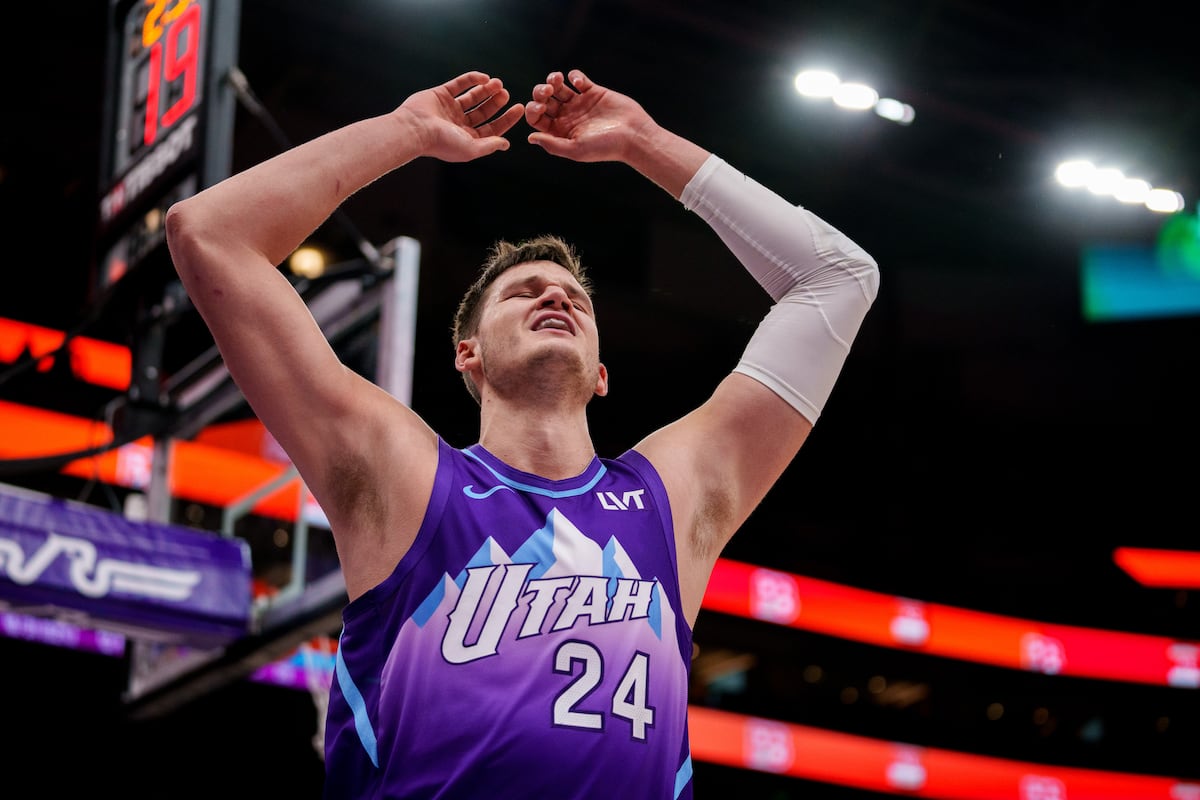
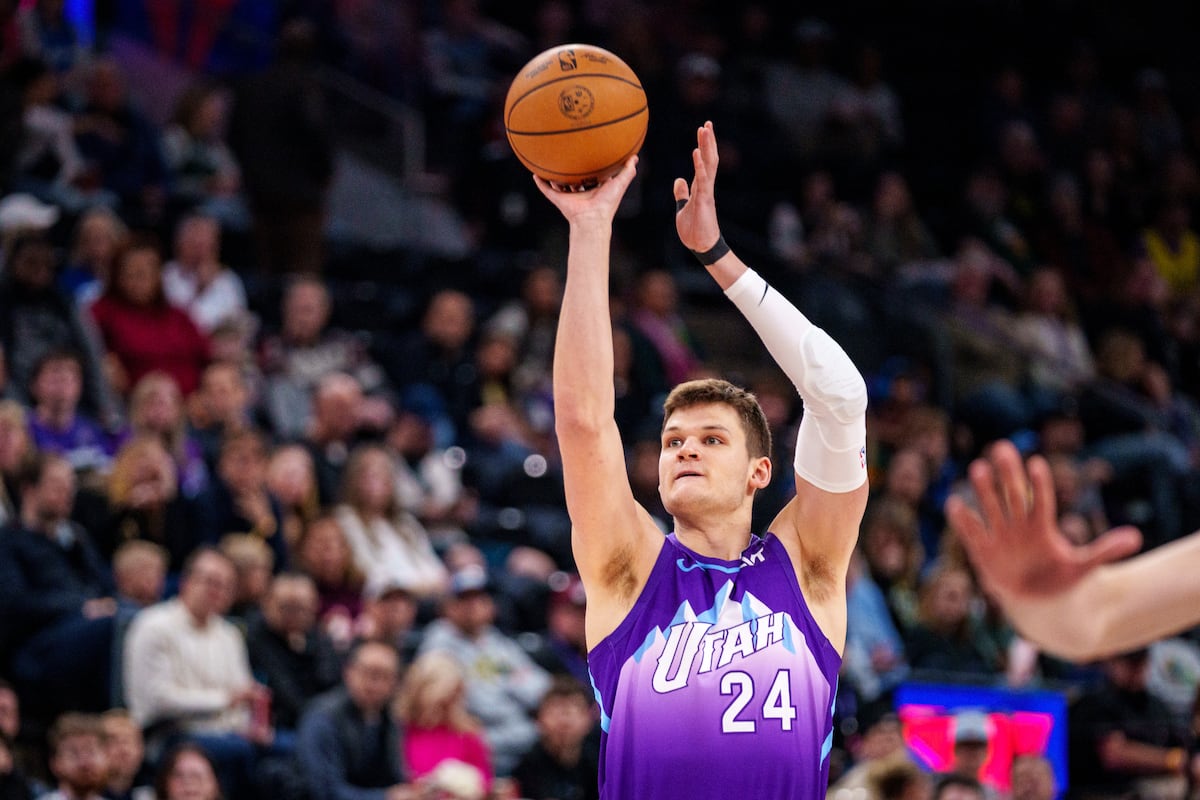
The Utah Jazz signed wing Josh Okogie to a two-year, $12 million contract. The 6-foot-4 guard brings immediate perimeter versatility after spending last season with the Houston Rockets. Okogie started his career as the 20th overall pick by the Minnesota Timberwolves in 2018 and has since played for the Phoenix Suns, Charlotte Hornets and Houston Rockets.
Okogie posted a career-high 38.5 percent from three-point range last season on more than two attempts per game. He also ranks in the 95th percentile in DDPM, a metric that estimates how much a player suppresses expected opponent scoring per 100 possessions. Those numbers reflect steady growth from a player who hovered near 30 percent from deep across his first seven seasons.

Okogie fits as a classic 3-and-D wing who can guard multiple perimeter spots while spacing the floor in smaller lineups. The Jazz have identified defense as a priority area, and his advanced metrics suggest he can raise the floor for a group that needs consistent stoppers. His ability to slide to the three without losing effectiveness gives the coaching staff options when mixing lineups around bigger frontcourt pieces.
Okogie joins an already crowded wing rotation that includes Darryn Peterson, Brice Sensabaugh and Cody Williams. The front office has prioritized adding experienced perimeter defenders who can complement the younger talent already on the roster. This move continues a pattern of targeting players whose defensive impact shows up in both traditional and advanced tracking data.

The next step involves integrating Okogie into training camp and preseason rotations to determine his role alongside the existing wings. His minutes will likely depend on how quickly the coaching staff trusts his defensive assignments against opposing starters and how his improved shooting holds up in game settings. If the percentages carry over from his Houston stint, he becomes a reliable rotation piece rather than a situational specialist.
Throughout his eight-year career, Okogie has carved out value as a defender first. Advanced stats began to validate that reputation during his time in Phoenix, where his on-ball and help contributions started registering at elite levels. Last season in Houston marked a clear offensive step forward, with the three-point percentage jump arriving on volume that makes him more than a spot-up threat. For a Jazz team still building its identity on the wing, the addition supplies a veteran presence capable of mentoring younger players while logging meaningful minutes in a rotation that demands versatility on both ends.

 Utah Jazz