
The Brooklyn Nets completed a two-year, $19 million contract with veteran big man Moe Wagner on Tuesday. The deal contains a mutual option for the second year; if either side declines, the remaining $9 million is not guaranteed and Wagner would return to unrestricted free agency next summer.
The structure leaves the Nets with just under $25 million of cap space, a cushion that can be bolstered by the mid-level exception. The Wagner agreement mirrors the Keon Ellis deal signed the previous night, underscoring a pattern of value-priced signings as interior salaries continue to rise. For reference, Walker Kessler commands $32.5 million annually, Mitchell Robinson earned $15.8 million, Jock Landale secured $14 million and Sandro Mamukelashvili took $13 million.

Trading former All-Star center Nic Claxton created a clear vacancy at the five position and elevated the newly re-signed Day’Ron Sharpe to presumptive starter. Wagner now provides the Nets with a backup, or potentially a platoon partner, for Sharpe. The duo replaces the rim-protection that Claxton supplied, but the trade-off is a noticeable drop in shot-blocking ability.
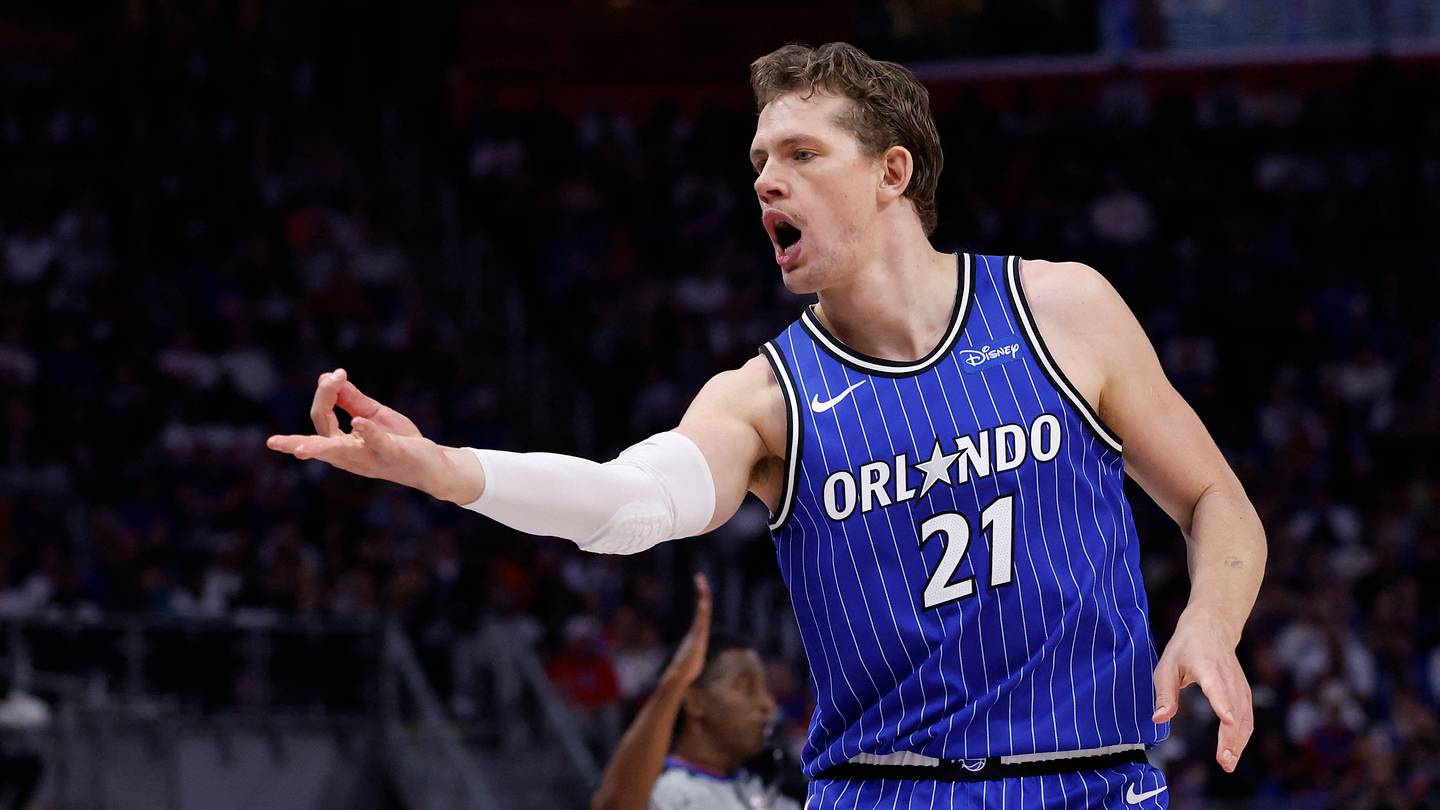
Statistically, Wagner contributed 6.9 points and 3.2 rebounds in 11.9 minutes per game last season, appearing in 36 contests after returning from a torn ACL. Over the three seasons preceding that year with Orlando, he averaged 11.1 points and 4.5 boards in 18.5 minutes while shooting .560/.329/.802. He is not a traditional stretch-five, but his ability to space the floor, run the pick-and-roll and finish at the rim adds a different dimension than Sharpe or Claxton offered.

General manager Sean Marks appears to be managing an inflated center market by pairing Wagner with Sharpe on a combined two-year, $20 million package. The approach keeps the Nets out of the max-salary race and preserves flexibility for future moves. A pending Claxton-Julius Randle swap could still require a small-salary piece to satisfy trade matching rules, as the club is currently $917,000 short according to cap analysts.
Training camp will be the first test of the Sharpe-Wagner tandem. If the pair can develop defensive cohesion while Wagner adapts to the faster NBA pace, the contract could be a low-risk upgrade that buys the organization time. Conversely, failure to address the lingering rim-protection gap could leave Brooklyn vulnerable against teams that dominate the paint, a factor that will shape the Nets' competitive window for years to come.
 Brooklyn Nets
