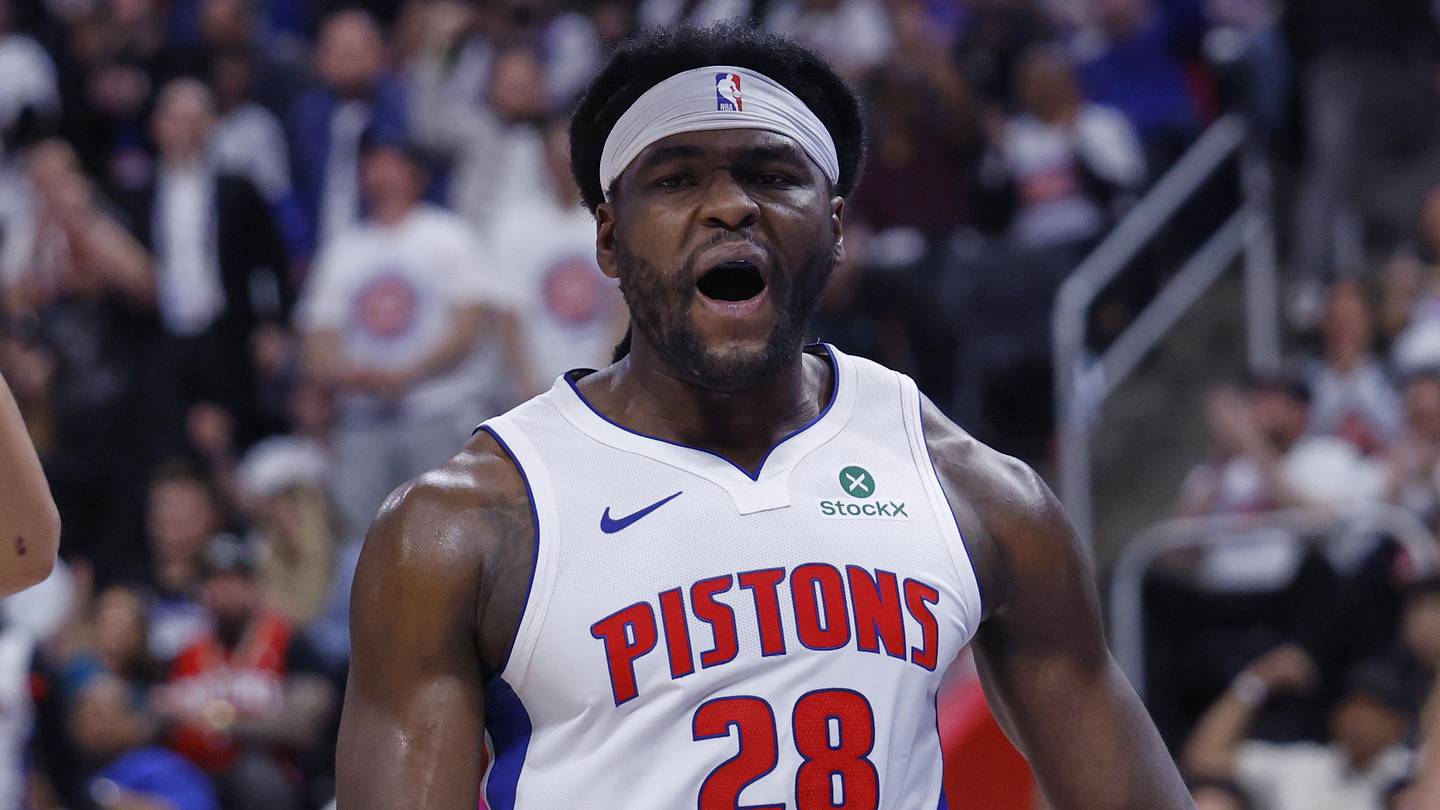
Detroit has placed forward Isaiah Stewart on the trade block, and three clubs , the Miami Heat, the Boston Celtics and the San Antonio Spurs , have voiced interest. Stewart’s reputation as a rugged defender and finisher at the rim makes him an appealing piece for teams looking to add interior toughness without sacrificing future flexibility.
The Pistons’ other potential trade chip is forward Ron Holland II, the 2024 No. 5 overall pick. Holland’s production this season underscores why his contract could be expendable. During the 2025-26 regular season he averaged 8.2 points, 4.0 rebounds and 1.2 assists while shooting 43.2 percent from the floor. In the postseason, when Detroit fell to the Cleveland Cavaliers in the Eastern Conference semifinals, his numbers dropped to 1.6 points, 1.4 rebounds and 0.1 assists. Those figures suggest he remains a high-upside asset that the Pistons can afford to move in a larger deal.
Each interested team could fit Stewart into a distinct role. Miami would likely view him as a complementary piece to a veteran-heavy core, pairing his interior toughness with Bam Adebayo’s rim protection. Boston could slot him into a defensive rotation that already features Robert Williams III, adding another rim-rattler for fast-break ends. San Antonio, still rebuilding around a young nucleus, might use Stewart as a bridge to acquire draft assets while maintaining a physical presence in the paint.
The trade conversation is inseparable from Detroit’s pursuit of New Orleans Pelicans forward Trey Murphy III, a proven three-point shooter and former first-team All-Defensive selection. Acquiring Murphy would instantly upgrade the Pistons’ wing scoring and perimeter defense. Including Stewart, and possibly Holland, in a package signals that the front office is willing to sacrifice depth for a starter who can push Detroit into the upper tier of the Eastern Conference.
The clock is already ticking. The NBA trade deadline arrives in February, giving Detroit a narrow window to finalize any package involving Stewart, Holland and a potential Murphy deal. If Miami, Boston or San Antonio submit a concrete offer before the deadline, Detroit could flip Stewart and Holland for a combination of veteran talent, expiring contracts or additional second-round picks. Failing that, the Pistons will likely keep Stewart for the remainder of the season while continuing to explore a Murphy trade that could materialize in the off-season, when cap space and draft considerations become more flexible.
Regardless of the outcome, the Pistons’ willingness to move both a defensive anchor and a recent first-round pick highlights a clear strategy: leverage current assets to acquire a proven wing scorer and defender in Murphy, thereby accelerating Detroit’s climb toward contention.
 Detroit Pistons