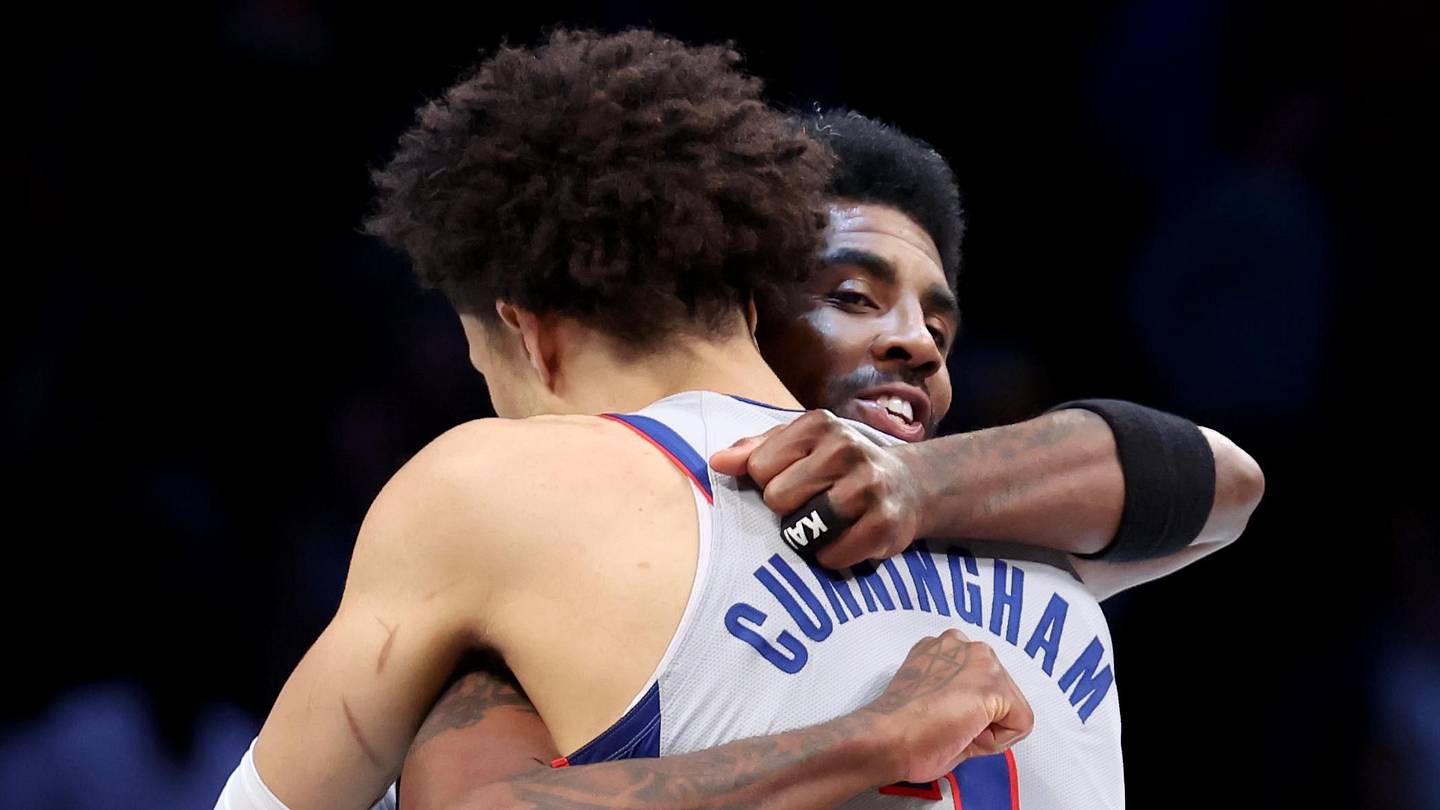
The Detroit Pistons own the No. 21 overall pick in the 2026 NBA Draft on June 23 at 8 p.m. at Barclays Center in New York. The team continues to evaluate prospects through predraft workouts as the event draws near. A running list of visitors includes potential two-way signees who could join the roster after the draft concludes.
Three of those prospects produced the following 2025-26 averages. One delivered 20.7 points and 4.3 assists per game while shooting 48 percent from the field and 36.5 percent from three-point range. Another posted 12.8 points, 4.9 rebounds and 4.6 assists on 44.7 percent shooting overall and 40.8 percent from three. The third averaged 11.6 points, 4.2 assists and 3.7 rebounds while making 42 percent of his shots and 29.2 percent from beyond the arc.
Those numbers reveal three distinct skill sets that align with the Pistons' stated needs heading into the middle of the first round. The high-volume scorer brings creation and efficiency that could supplement the backcourt without demanding constant three-point volume. The well-rounded wing offers secondary creation plus rebounding versatility that would add balance to the forward group. The third guard supplies playmaking but would require offensive adjustments around his lower three-point percentage.
Detroit has identified three clear areas to address in this draft. Workouts allow the front office to measure how each prospect's production might translate to the current roster construction built around its young core. Selecting at No. 21 gives the Pistons a chance to add immediate rotation help or a developmental piece with two-way upside. The approach reflects a consistent strategy of targeting talent in the middle of the first round to deepen the group without overextending resources.
With the draft five days away, evaluations remain critical before the Pistons finalize their board. The decisions at No. 21 and in subsequent rounds will determine which statistical profiles join the rotation next season. Post-draft two-way signings provide another avenue to bring in undrafted prospects who flashed potential during these sessions. Each workout offers concrete data on how a prospect's strengths fit the system's emphasis on spacing, creation and defensive versatility.
The Pistons enter this process with momentum from recent development of young players. Adding the right pieces at No. 21 could accelerate that growth. The combination of scoring punch, wing balance and guard vision among the workout participants gives Detroit multiple paths to address its priorities. How those profiles ultimately fit will shape the roster's direction for the years ahead.
 Detroit Pistons