The Houston Rockets have reached the stage of a rebuild where the direction of the franchise is no longer dictated by the draft lottery alone. After a season that demonstrated significant competitive growth, the front office now faces a summer that will define their status in an increasingly crowded Western Conference. The central question looming over the organization involves the pursuit of a veteran superstar to accelerate their timeline.
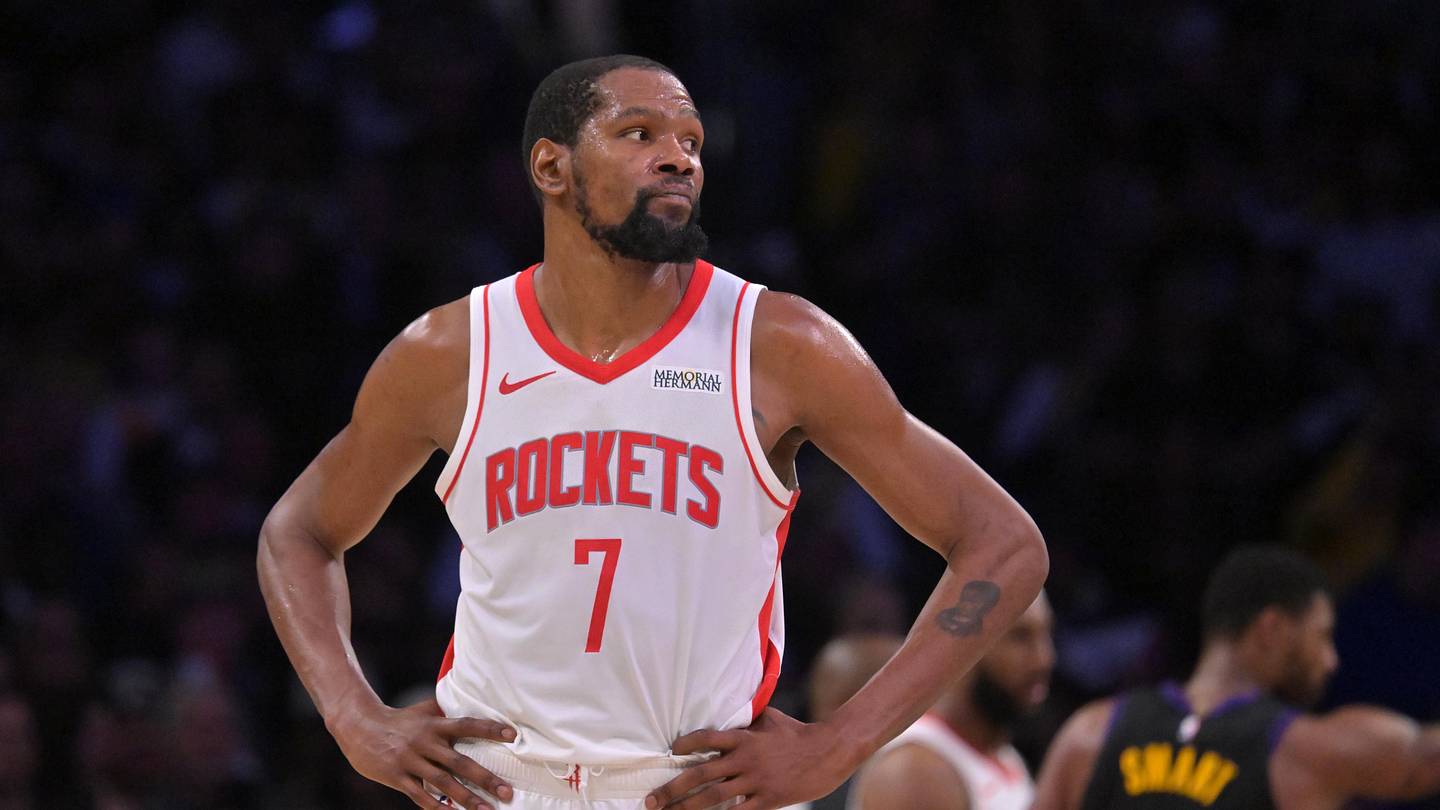
Rumors regarding a potential trade for Kevin Durant have moved from the periphery of league gossip to a central headline this offseason. While the idea of adding one of the greatest scorers in basketball history is naturally alluring, the logic behind such a massive transaction remains under intense scrutiny.
The Rockets are weighing the immediate benefits of a future Hall of Famer against the long-term health of their current roster construction.
According to reporting from Bleacher Report, a trade for Durant has been characterized as one of the primary needs for the Houston Rockets ahead of the NBA Draft. This perspective suggests that the team requires a definitive closer to bridge the gap between being a competitive young group and a true contender. However, the feasibility and the wisdom of this move are being questioned by those who prefer a more patient approach.
Durant is currently under a contract extension he signed prior to last season, and there has been no public indication that he has expressed a desire to be moved. The lack of a formal trade request makes the speculation somewhat speculative, yet the Rockets possess the trade value and draft assets necessary to enter almost any high-level conversation.
This creates a tension between what the team could do and what it should do to maximize its future.
The argument for acquiring Durant centers on the specific skills he brings to a lineup. The Rockets have identified a need for veteran leadership and elite scoring to help navigate the closing minutes of tight games.
Durant provides unparalleled spacing and high-level shot-making that would theoretically simplify the game for Houston’s younger players. His presence would demand defensive attention that currently no one else on the roster can command.
Despite these basketball advantages, the timeline for such a move is difficult to reconcile with the rest of the roster. Bleacher Report noted that while the Rockets might not win as many games in the short term without a major move, they are likely not ready to compete with the top tier of the conference yet. The Oklahoma City Thunder and the San Antonio Spurs represent two different but equally daunting challenges in the West.
The Thunder have already established themselves as a powerhouse with a young core that has years of chemistry. Meanwhile, the Spurs are building around a unique talent that could shift the power dynamics of the division for a decade.
If the Rockets sacrifice their future flexibility for Durant, they risk a scenario where their window for contention is too brief. By the time their current young core reaches their collective prime, Durant could be 40 years old.
This age gap creates a significant risk regarding the trade value of the assets Houston would have to surrender. To fit a player of Durant’s caliber into their salary slots, the Rockets would likely need to part with multiple high-upside players or significant draft capital.
Such a move would deplete the depth that served them well during their recent surge in the standings. The fan stakes are high, as the city is eager for a return to the playoffs but wary of a short-sighted gamble.
The upcoming NBA Draft provides another avenue for the Rockets to address their roster needs without a blockbuster trade. Houston currently holds two second-round picks that could be utilized to bolster their shooting and guard depth.
While these picks do not carry the same weight as a superstar acquisition, they offer a way to round out the rotation with low-cost talent. Improving the bench could provide the incremental gains necessary to push for a postseason spot.
Shooting has been a consistent area of concern for the Rockets as they look to create more rim pressure for their primary ball handlers. Without reliable floor spacers, the driving lanes become clogged, making it difficult for the young guards to finish at the basket.
Adding specialized talent through the draft or smaller free agent moves might be a more logical path than an all-in trade for an aging star. This approach preserves the team's leverage in future negotiations.
There is also the matter of the internal chemistry that began to form over the latter half of the past season. Bringing in a high-usage player like Durant would fundamentally alter the roles of every player on the court.
While a superstar can mask many flaws, the development of the existing core might be stunted if they are relegated to standing in the corners. The Rockets must decide if they value the organic growth of their current group over the immediate gravity of a superstar.
The financial implications of a Durant trade would also impact the team's ability to manage future cap holds. As their young players approach their second contracts, the Rockets will need every bit of flexibility to keep their core together.
Taking on a massive salary slot for an older player could force difficult decisions regarding which young talents to retain. It is a balancing act that requires a precise understanding of the team's ultimate ceiling.
Some analysts argue that the reason for pursuing a veteran superstar is to establish a culture of winning and to provide a blueprint for the younger players. The logic is that a player who has won at the highest level can teach the nuances of the game that are often lost in a rebuild. However, if the cost of that education is the very talent the veteran is supposed to mentor, the trade becomes a self-defeating exercise.
The Rockets are in a position of strength because they do not have to make a move out of desperation. They have the luxury of waiting for the right opportunity rather than forcing a trade that might not fit their long-term vision.
The rumors surrounding Durant serve as a reminder of how quickly the narrative can shift for a team with assets and aspirations. Whether they choose to stay the course or swing for the fences will determine the trajectory of the franchise for the next five years.
If the Rockets truly believe they are a piece away from contending, the lure of a superstar will remain constant throughout the summer. But the reality of the Western Conference suggests that a single player, regardless of their pedigree, may not be enough to bypass the established powers. The most prudent path involves a careful evaluation of how each move affects the lineup fit and the eventual peak of the roster.
Ultimately, the decision to pursue a trade of this magnitude must be grounded in logic rather than a reaction to external pressure. The Rockets have built a foundation that allows them to be picky about who they add to their locker room.
Moving for a player who will be 40 by the time the rest of the team is ready to win would be a gamble that ignores the progress they have already made. Houston must decide if they are building for a single season or for a decade of relevance.
 Houston Rockets