The Phoenix Suns have decided that the best version of their roster is the one they rarely saw on the floor together last spring. By securing restricted free agent Mark Williams on a three-year, $38 million contract, the front office is betting that continuity will eventually outweigh the fragility that defined their previous campaign.
This deal, first reported by Shams Charania for The Athletic and The New York Times, keeps the 24-year-old center in Phoenix through his physical prime.
For a team that finished 45-37 and exited the postseason in a demoralizing first-round sweep, the decision to double down on the current rotation is a calculated risk. Williams is the centerpiece of that gamble.
When he was on the floor last season, he provided the specific kind of rim pressure and vertical spacing that a backcourt featuring Devin Booker and Jalen Green requires to function at peak efficiency. His averages of 11.7 points and 8 rebounds were efficient, but his availability remained the primary concern for the coaching staff.
The contract is fully guaranteed, which signals a significant level of trust from the Suns' leadership. Williams has struggled with various ailments throughout his four-year professional career, including a left foot injury that sidelined him during the most critical stretch of the season.
He managed to play in a career-high 60 games last year, yet he was a spectator during the four-game series loss to the Oklahoma City Thunder. That absence left the Suns without a viable defensive anchor to challenge the relentless drives of the Thunder guards.
To understand the value of this $12.6 million annual salary, one must look at the alternative options in a restrictive salary cap environment. The Suns are operating with limited flexibility, making the retention of their own restricted free agents a priority for maintaining talent slots.
By re-signing Williams, they keep a 7-foot-1 interior presence who understands the defensive schemes of coach Jordan Ott. If they had let him walk, replacing his production with a minimum-salary player or a portion of the taxpayer midlevel exception would have been a nearly impossible task.
Williams arrived in Phoenix via a draft-day trade with the Charlotte Hornets last June, a move that followed a bizarre sequence in his career trajectory. Months earlier, he was nearly sent to the Los Angeles Lakers at the 2025 trade deadline.
That deal was famously rescinded after he failed his physical, a moment that could have defined his reputation as an unreliable asset. Instead, he found a rhythm in Phoenix during the early months of the season, looking like a long-term solution at the five spot before the injuries resurfaced.
The drop-off in his production after the All-Star break was stark. Williams appeared in only 10 games during the final months of the regular season, struggling to regain the mobility that makes him an effective pick-and-roll partner.
His return to the lineup is not just about the stats he provides, but about the gravity he creates. When Williams rolls hard to the basket, defenders are forced to collapse, which creates the high-value corner three-point opportunities that Grayson Allen and Dillon Brooks thrive on.
Phoenix is not just bringing back Williams; they are attempting to solidify an entire supporting cast that showed flashes of brilliance before fizzling out. The team has also agreed to terms with Collin Gillespie on a four-year, $48 million deal and Jordan Goodwin on a three-year, $19 million contract.
These moves indicate that the organization believes the 45-win output was a floor rather than a ceiling. They are prioritizing players who have already spent a year marinating in Ott’s system.
Gillespie provided a much-needed injection of perimeter shooting and floor generalship during his breakout performances last season. His chemistry with Williams in the second unit gave the Suns a traditional look that contrasted with their more chaotic, small-ball lineups.
Meanwhile, Goodwin has become a favorite of the coaching staff for his ability to set a physical defensive tone. By locking up both guards alongside Williams, the Suns have secured their primary rotation for the foreseeable future.
The internal hope is that a full training camp will allow the core trio of Booker, Green, and Brooks to finally establish the chemistry that eluded them last year. All three players battled their own health issues, leading to a disjointed offensive flow that often relied too heavily on individual brilliance.
Williams serves as the connective tissue for this group. He does not require high-usage sets to be effective, which allows the primary scorers to operate with more space.
While the veterans provide the floor, the Suns are looking toward their younger prospects to raise the team's ceiling. Khaman Maluach and Rasheer Fleming were brought along slowly during their rookie seasons, but the front office expects both to compete for rotation minutes this fall.
Maluach, in particular, offers a different defensive look than Williams, possessing the lateral quickness to switch onto smaller players. The development of these two forwards will be crucial in managing the workload of the older starters.
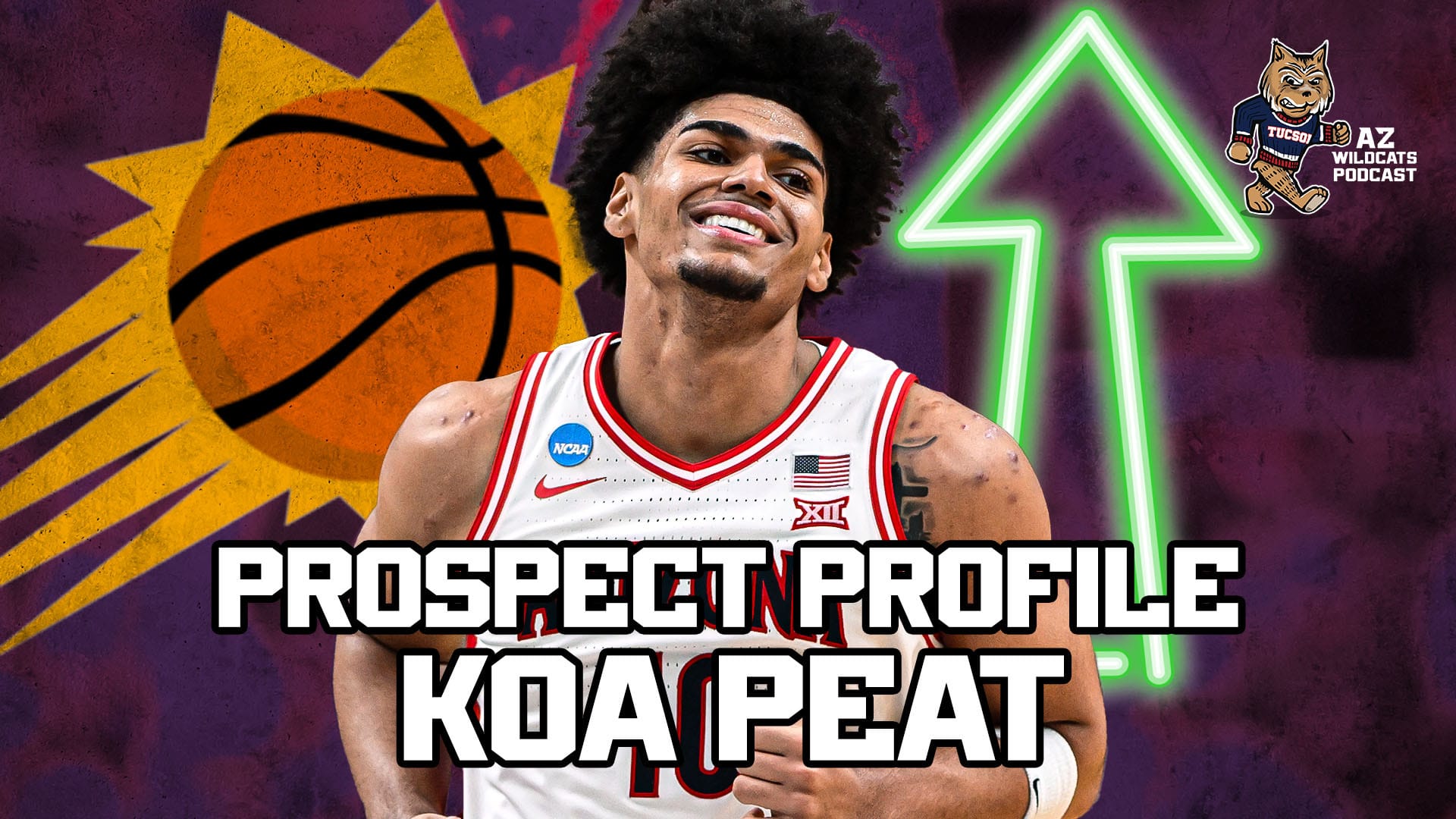
Adding to the youth movement is Koa Peat, the forward from Arizona whom the Suns aggressively pursued in the recent NBA Draft. By trading up to the final pick of the first round to select Peat, Phoenix signaled a desire to add more versatile wing depth.
Peat's ability to play multiple positions could provide Jordan Ott with the tactical flexibility he lacked during the sweep against Oklahoma City. Integrating a rookie into a win-now environment is always a challenge, but Peat’s local ties and physical profile make him an intriguing piece of the puzzle.
The financial implications of the Williams deal are significant. By committing $38 million to their starting center, the Suns are inching closer to the luxury tax thresholds that limit roster movement.
However, the deal is structured in a way that keeps Williams as a tradable asset. Should his health issues persist, a 24-year-old center on a mid-tier contract is often easier to move than an aging veteran on a max deal.
For now, the Suns are focused on the leverage he provides on the court rather than his value in the trade market.
Fan reaction on platforms like Reddit has been a mixture of relief and skepticism. While many supporters recognize that Williams is the best center the team has had in years, the memory of his empty chair on the bench during the playoffs remains fresh.
There is a consensus that the talent is undeniable, but the availability remains the ultimate variable. The Suns are betting $38 million that the foot injury was a setback rather than a permanent condition.
As the Western Conference continues to get younger and more athletic, the Suns are choosing to rely on a blend of established stars and unproven but talented role players. The return of Williams ensures that Phoenix will not be bullied in the paint, provided he can stay in the lineup.
The rim protection he offers is the foundation of their defensive scheme, allowing the perimeter defenders to play more aggressively knowing there is a 7-foot-1 safety net behind them.
The upcoming season will be the ultimate litmus test for this roster construction strategy. If Williams, Booker, and Green can stay healthy for 65 games or more, the Suns have the firepower to compete with the elite of the West.
If the injury patterns of the past two seasons repeat themselves, the front office may be forced to reconsider the viability of this core. The three-year window of this contract aligns perfectly with the championship aspirations of the current veteran group.
By securing Mark Williams, the Suns have essentially closed the door on any major external overhauls this summer. They have identified their personnel and decided that the answers to their problems lie within the current locker room. The success of this move will not be measured by the statistics Williams puts up in November, but by whether he is dressed in a jersey or a suit when the postseason begins next April.

 Phoenix Suns