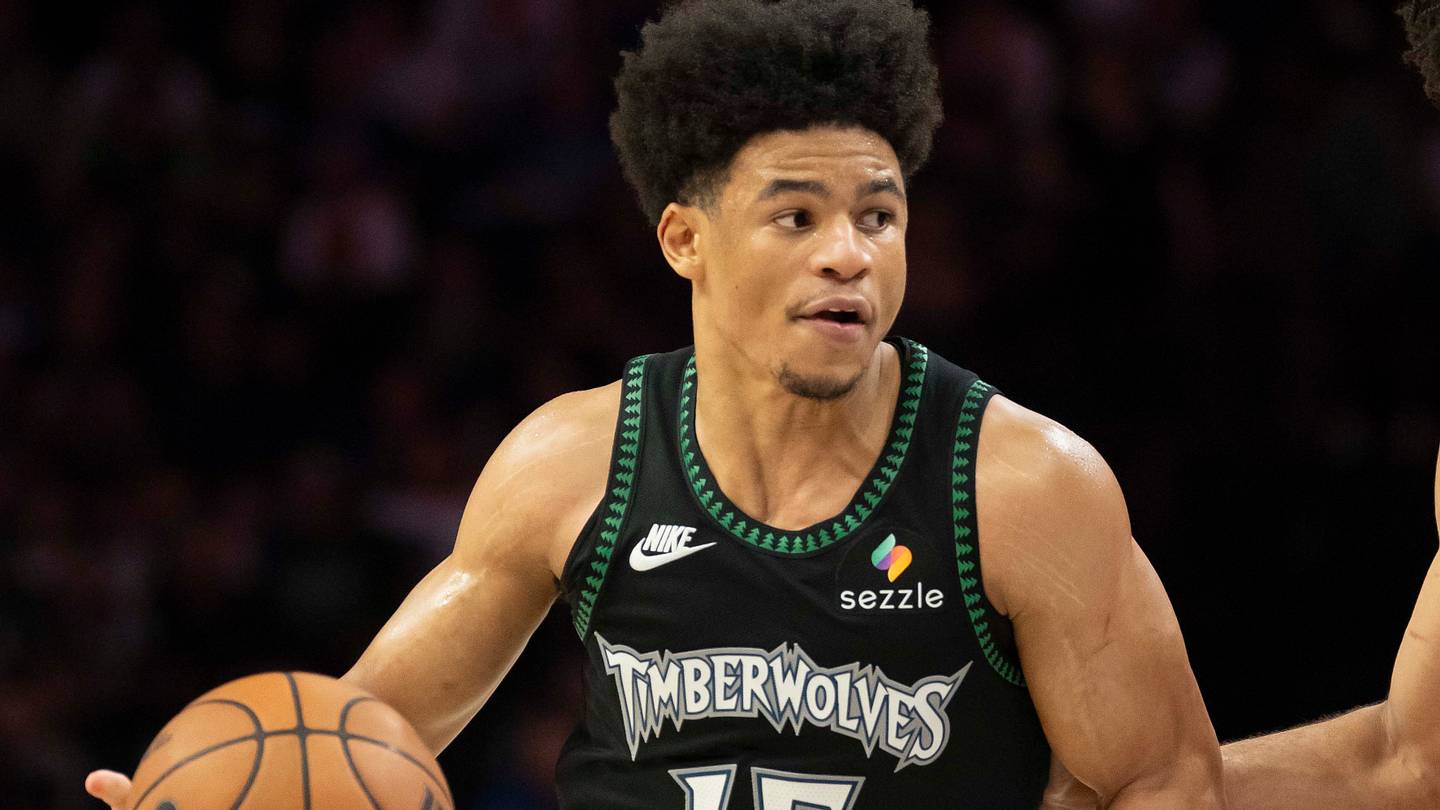
The Minnesota Timberwolves are once again facing the perennial question: do they possess the necessary firepower to contend for an NBA championship next season? This query takes on added weight as the team navigates a landscape of significant financial commitments and recent roster adjustments. With the franchise having made deep playoff runs in consecutive seasons, including a Western Conference Finals appearance in 2024, the pressure to break through is palpable.
Financially, the Timberwolves are deeply invested in their core. Anthony Edwards is in the first season of a five-year, $244.6 million contract, which could escalate to $260 million if he makes an All-NBA team. Rudy Gobert, the four-time Defensive Player of the Year, recently signed a three-year, $110 million extension, a deal that saw him decline a $46.6 million player option for the 2025-26 season to provide the team with immediate financial flexibility. Jaden McDaniels is also locked into a five-year, $136 million extension. These hefty contracts mean Minnesota is significantly over the projected 2024-2025 salary cap of $141 million, exceeding it by approximately $51.8 million, and are well into the luxury tax, with an estimated bill of around $49.4 million. This financial reality severely limits their ability to add external talent without making significant trades.
The basketball analysis of this Timberwolves roster is complex. The defense-first identity, anchored by Gobert, has proven effective, propelling them to a 49-33 record in the 2024-25 season, finishing 6th in the Western Conference with a 5th-ranked opponent points per game at 109.3. However, their offensive rating of 116.6, while 8th in the league, suggests there's still room for improvement, particularly in consistent half-court execution and ball movement, as evidenced by their 18th ranking in assist percentage. The departure of Karl-Anthony Towns to the New York Knicks in a three-team trade for Julius Randle, Donte DiVincenzo, Keita Bates-Diop, and a future first-round pick, shifts the offensive dynamic considerably. While Randle provides a proven scoring punch, the overall frontcourt depth now presents a challenge, especially considering the team's limited financial flexibility.
The wider context of the Timberwolves' trajectory points to a front office committed to building around Anthony Edwards. His continued ascent as a legitimate superstar is the cornerstone of their championship aspirations. The recent acquisition of LaMelo Ball, alongside Josh Green, in a trade that sent out Naz Reid and Julius Randle, signals a clear intent to surround Edwards with more playmaking and shooting. However, integrating Ball's ball-dominant style with Edwards' burgeoning on-ball creation will be a critical coaching challenge for Chris Finch. Gobert himself has stated, "The goal is still the same. Regardless if we would have had a deal or not, the goal is to win a championship."
The immediate future holds crucial decisions for the Timberwolves. With 13 players currently on the roster and less than $4 million below the second apron, Minnesota needs to add at least one more player to reach the NBA minimum of 14. The most straightforward path involves signing a veteran to a $2.4 million minimum contract. Any further significant roster upgrades would necessitate creative cost-cutting trades, a challenging prospect given their limited draft capital. The successful integration of LaMelo Ball and the continued development of Anthony Edwards will be the primary determinants of their championship viability in the upcoming season.