The Atlanta Hawks, fresh off a playoff run that defied mid-season expectations, have secured a critical piece of their revitalized roster, ensuring a veteran presence remains in the fold. CJ McCollum, whose arrival coincided with a dramatic shift in the team's fortunes, has agreed to a one-year, $21 million contract extension, as first reported by ESPN and later confirmed by a league source to The Athletic.
This commitment keeps McCollum out of the summer free agency market, signaling the Hawks' intent to build on their recent momentum and maintain a competitive edge in the Eastern Conference.
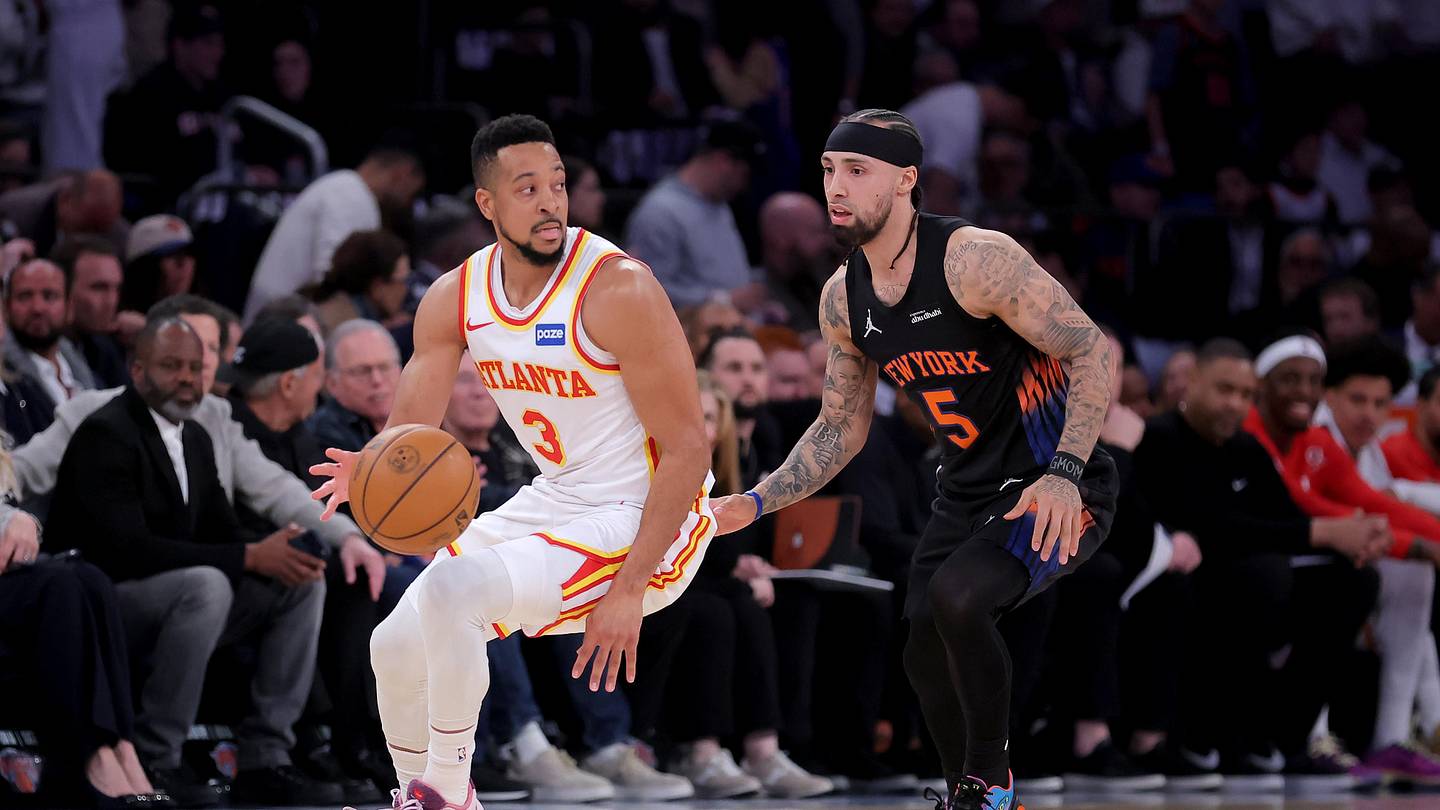
McCollum's impact was immediate and undeniable after he was acquired by Atlanta at the trade deadline this past season. The veteran guard seamlessly integrated into the team's offensive flow, providing a crucial secondary ball-handler and an invaluable late-game scoring option. His consistent production helped transform a struggling squad into a playoff contender, a testament to his on-court leadership and clutch playmaking.
Before McCollum’s arrival in a January 9 trade that sent Trae Young to the Washington Wizards, the Hawks languished with a 19-21 record. The team’s trajectory fundamentally altered once he joined, embarking on an impressive 27-15 run through the remainder of the regular season. This late-season surge was enough to secure the sixth seed in the Eastern Conference, allowing Atlanta to bypass the unpredictable Play-In Tournament entirely.
The true measure of McCollum’s value, however, became apparent under the heightened pressure of the postseason. Facing the eventual NBA champion New York Knicks in the first round, the Hawks pushed the series to six games, largely due to McCollum’s heroics. He emerged as a late-game difference-maker in both of Atlanta’s victories, including a memorable game-winning jumper in Game 3 and a 32-point outburst in Game 2.
Throughout that playoff series, McCollum averaged 19.2 points per game on an efficient 46.5 percent shooting from the field. His regular-season averages with the Hawks were similarly robust, posting 18.7 points and 4.1 assists per game, with shooting splits of 45.6 percent from the field, 35.7 percent from three-point range, and 74.8 percent from the free-throw line over 41 appearances.
These numbers underscore his consistent offensive production and reliable presence.
The decision to extend McCollum, particularly on a one-year term, reflects a shrewd strategic move by the Hawks' front office. While his on-court contributions were essential, securing him for just one additional season avoids the long-term salary commitments often associated with veteran players.
With McCollum set to turn 35 when training camp opens, mitigating the risk of unwelcome out years on the tail end of a longer contract was a clear priority.
This short-term commitment is a win for the Hawks, balancing the need to retain a key contributor with prudent roster management. The $21 million figure for the upcoming season represents a significant reduction from his previous $30.7 million salary, a difference that carries profound implications for Atlanta's summer maneuvering. This reduction in his cap hold provides substantial leverage for future roster construction.
The flexibility generated by McCollum's new deal positions the Hawks to operate as a cap room team, provided they execute a few additional strategic moves. Central to this plan is the potential to move either Zaccharie Risacher or Corey Kispert, two small-forward options currently on the roster. Both players are set to earn $13.9 million this coming season, and finding a taker for one of their salaries would be a critical step.
Should the Hawks successfully facilitate a trade involving either Risacher or Kispert, the path to substantial cap space becomes even clearer. Further enhancing this flexibility would be declining Jonathan Kuminga’s $24 million option for the upcoming season. Additionally, stretching Buddy Hield’s partial guarantee would create further financial breathing room, moving closer to nearly $25 million in available cap space for the summer.
These potential actions paint a picture of a front office committed to maximizing its options, rather than being bound by previous commitments. The reduced salary for McCollum and the strategic movement of other assets suggest an aggressive approach to reshaping the roster. This cap space, if fully realized, opens up avenues for pursuing high-impact free agents or absorbing significant contracts in a trade.
The one-year structure also provides the Hawks with optionality regarding McCollum himself. While the deal includes a trade kicker, which might slightly complicate using his expiring salary in a future trade, the source suggests such a move is "unlikely anyway." The primary benefit of his re-signing lies not in his trade value but in the broader financial landscape it creates for Atlanta to make other substantial improvements.
McCollum's role goes beyond just scoring; he brings a veteran composure and understanding of how to operate within an offense, which proved invaluable to the Hawks. His ability to create his own shot and facilitate for others alleviates pressure on the remaining backcourt players, contributing to better overall spacing and rim pressure from the team's interior players. This is a crucial element for a team aiming to compete in a tough conference.
The current deal reinforces the idea that the Hawks are prioritizing immediate competitiveness while maintaining future flexibility. They are not committing to a long-term rebuild but rather a retooling around a core that showed promise. The collective talent on the roster, combined with the financial maneuverability created by this extension, offers a compelling narrative for potential free-agent targets.
This strategic contract allows the Hawks to avoid a situation where they might be forced into less desirable long-term deals. It keeps their options open, whether that means making a significant splash in free agency, participating in a major trade, or simply having the financial cushion to take on unexpected opportunities. The fan stakes are high, as this decision directly impacts the team's ability to contend in the immediate future.
The Hawks' front office has demonstrated a clear understanding of the evolving landscape, using McCollum’s extension as a springboard for broader roster enhancements. By securing a proven playoff performer on a team-friendly, short-term deal, Atlanta has simultaneously solidified its current competitive stance and unlocked a range of powerful financial options for summer acquisitions.
This move ensures the Hawks are positioned to aggressively pursue talent and build on the unexpected success of the previous season.
 Atlanta Hawks