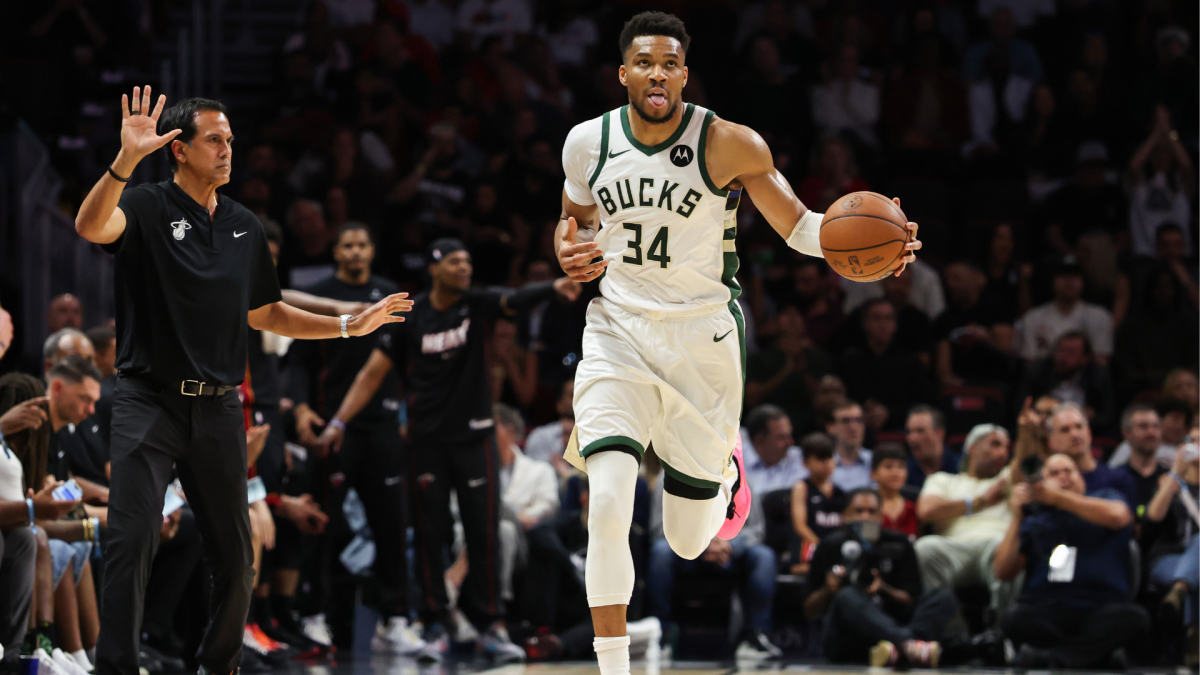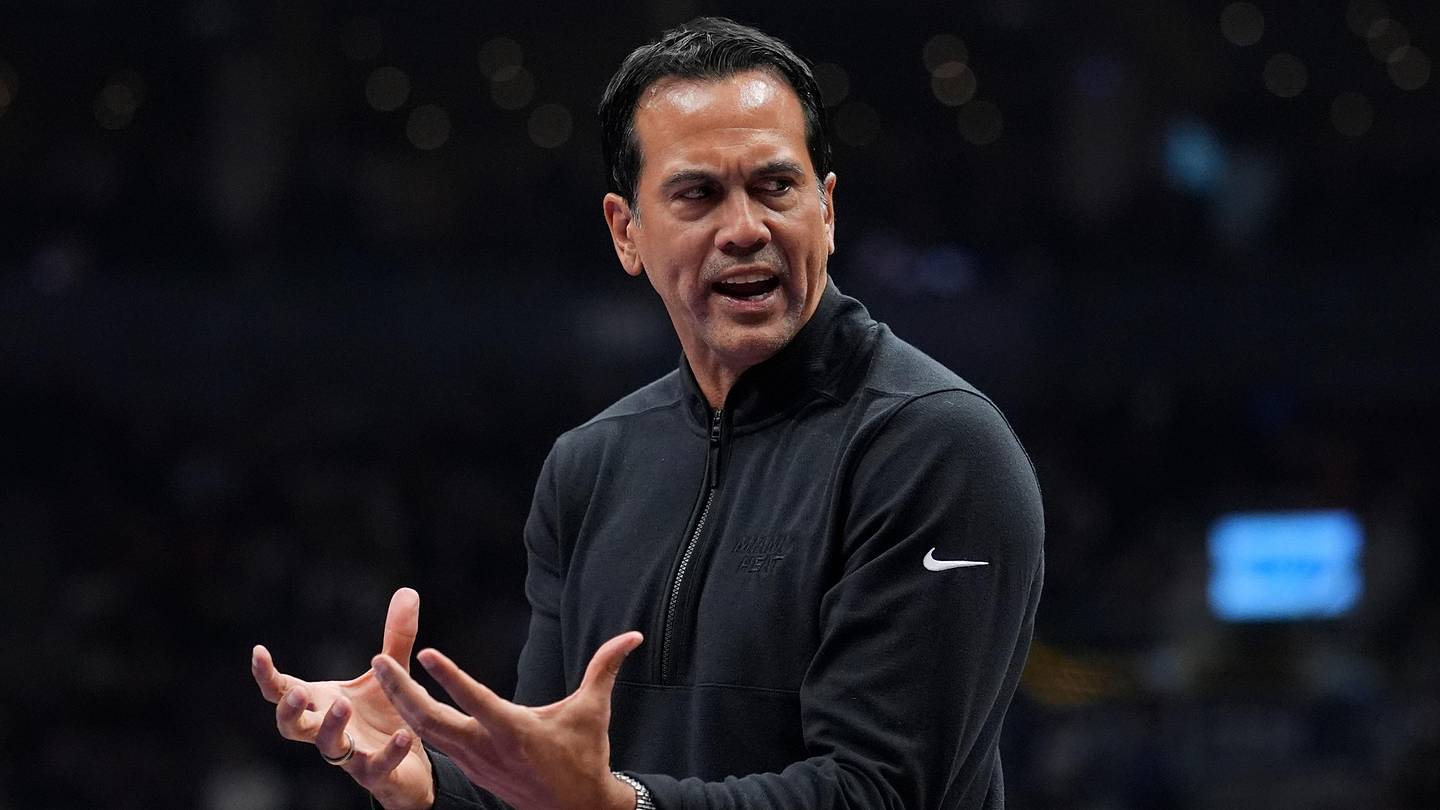
Pat Riley has built his career around parallel tracks. While the rest of the league watches the Miami Heat position themselves as the presumptive favorites for Giannis Antetokounmpo this offseason, Riley's front office is quietly constructing a fallback that carries its own gravity. The contingency plan, it turns out, involves another former Finals MVP.
According to NBA insider Sam Amick, the Heat have significant interest in Los Angeles Clippers wing Kawhi Leonard should their pursuit of Antetokounmpo ultimately come up short. Amick's reporting confirmed an earlier report from Jake Fischer identifying Leonard as part of Miami's Plan B list. The dual sourcing suggests the Heat's interest is more than casual background work.
Amick offered a revealing quote from his reporting: "League sources also confirmed a report from NBA reporter Jake Fischer that the LA Clippers' Kawhi Leonard is on the Heat's Plan B list (or the Golden State Warriors' Plan A list). The issue around the league, however, is that no one seems to know if Leonard is truly available."
That last sentence is the fulcrum of the entire conversation. Miami expressing interest in an elite talent is never surprising. The Heat's organizational DNA practically requires it. But interest and availability are two very different currencies in the trade market, and right now, there is no clear indication that the Clippers are shopping Leonard or that they have signaled any willingness to move him.
The Clippers find themselves at a genuine organizational crossroads. Last season, they moved on from both James Harden and Ivica Zubac, pivoting toward younger talent by acquiring Darius Garland and Benedict Mathurin. They also hold the fifth pick in what is widely considered a loaded 2025 draft class. These are the moves of a franchise recalibrating, not one clinging to competitive immediacy.
But recalibrating around what? That is the question that makes the Leonard situation so murky.
If the Clippers view Garland, Mathurin, and a high draft pick as the core of their next competitive chapter, then Leonard, who turns 34 in June, may not fit the timeline. His availability concerns over the past several seasons only complicate that calculus.
Yet none of that means the Clippers have decided to part with him, and the gap between speculation and reported availability remains wide.
For the Heat, the strategic logic of pursuing Leonard is straightforward even if the medical and availability risks are not. Miami has spent the last several seasons trying to find enough high-end shot creation to complement Bam Adebayo and Tyler Herro.
Leonard, when healthy, remains one of the most complete two-way players in basketball. His ability to create shots from the midrange, attack in isolation, and defend the opposing team's best perimeter player would reshape Miami's ceiling overnight.
The fit next to Adebayo is particularly interesting. Adebayo's versatility as a screener, short-roll passer, and switchable defender would give Leonard the kind of infrastructure he thrives in.
A Leonard-Adebayo pick-and-roll, flanked by Herro's shooting, would present opponents with layered decision-making problems on every possession. Miami's spacing, which has been inconsistent at times, would benefit from Leonard's gravity as a scorer who forces defensive attention without needing a high volume of possessions to stay engaged.
The salary math, however, is never simple when acquiring a player of Leonard's stature. Any trade for Leonard would need to work within the league's salary-matching rules, and the Heat would likely have to send out meaningful contracts in return.
Miami's roster construction under Riley has long prioritized maintaining flexibility, but flexibility can evaporate quickly when dealing at the superstar level. What the Heat would have to surrender to make the numbers work, and whether that weakens the surrounding roster to the point of diminishing returns, is a real tension that would shape any negotiation.
There is also the broader competitive context to consider. The Eastern Conference hierarchy has shifted in recent seasons, and the Heat have been caught somewhere between contention and transition.
They reached the NBA Finals in 2023 as an eight-seed, a run that felt both miraculous and like a testament to Riley and Erik Spoelstra's organizational standards. But sustaining that level of performance requires more than culture and coaching.
It requires top-end talent that can win playoff possessions against elite defenders.
Antetokounmpo represents the clearest path to that talent. A player of his caliber, still in his prime and capable of anchoring both ends of the floor, would immediately vault the Heat back into title contention.
Leonard, by contrast, offers a lower floor because of his injury history and a ceiling that, while elite, comes with significant risk. The distinction between Plan A and Plan B is not just about preference.
It reflects a genuine difference in probability and upside.
Still, the fact that Miami is thinking in these layers says something about the front office's awareness of where it stands. The Heat are not a team that can afford to enter an offseason with a single target and no alternatives.
Riley has always operated with the understanding that star acquisitions are low-probability, high-reward gambles. Having multiple options, even ones with significant question marks, is how you avoid coming out of a pivotal summer empty-handed.
The Golden State Warriors' reported interest in Leonard adds another dimension. Amick's reporting identified Leonard as potentially the Warriors' Plan A, which means the Heat may not just be competing with the Clippers' reluctance to trade.
They could also be competing with another franchise for whatever limited window of opportunity exists. If Golden State is willing to offer a more attractive package, or if Leonard has a destination preference, Miami could find itself outbid even if a deal materializes.
None of this is imminent. As Amick noted, no one around the league seems to know if Leonard is truly available.
That uncertainty is the defining feature of this particular storyline right now, and it may remain that way well into the offseason. The Clippers have legitimate reasons to hold onto Leonard and equally legitimate reasons to explore moving him.
Until they tip their hand, the Heat's interest functions more as a statement of readiness than the beginning of an active negotiation.
What is clear is that Miami's offseason will be defined by ambition. Whether that ambition results in Antetokounmpo, Leonard, or neither, the Heat are positioning themselves to act decisively if the market shifts in their favor. Riley has always understood that championships are won in the margins between preparation and opportunity. This summer, the Heat are making sure those margins are as narrow as they can manage.
 Miami Heat