The standard of success for the Dallas Mavericks is no longer measured by incremental progress or playoff appearances. With a generational talent like Luka Doncic in his prime, the organization operates under a permanent sense of urgency that dictates every front office decision.
This environment creates a natural scrutiny regarding the coaching staff and the long term vision for the sideline. Recent reports indicate the Mavericks are keeping a close eye on the collegiate ranks for a potential solution to their leadership needs.
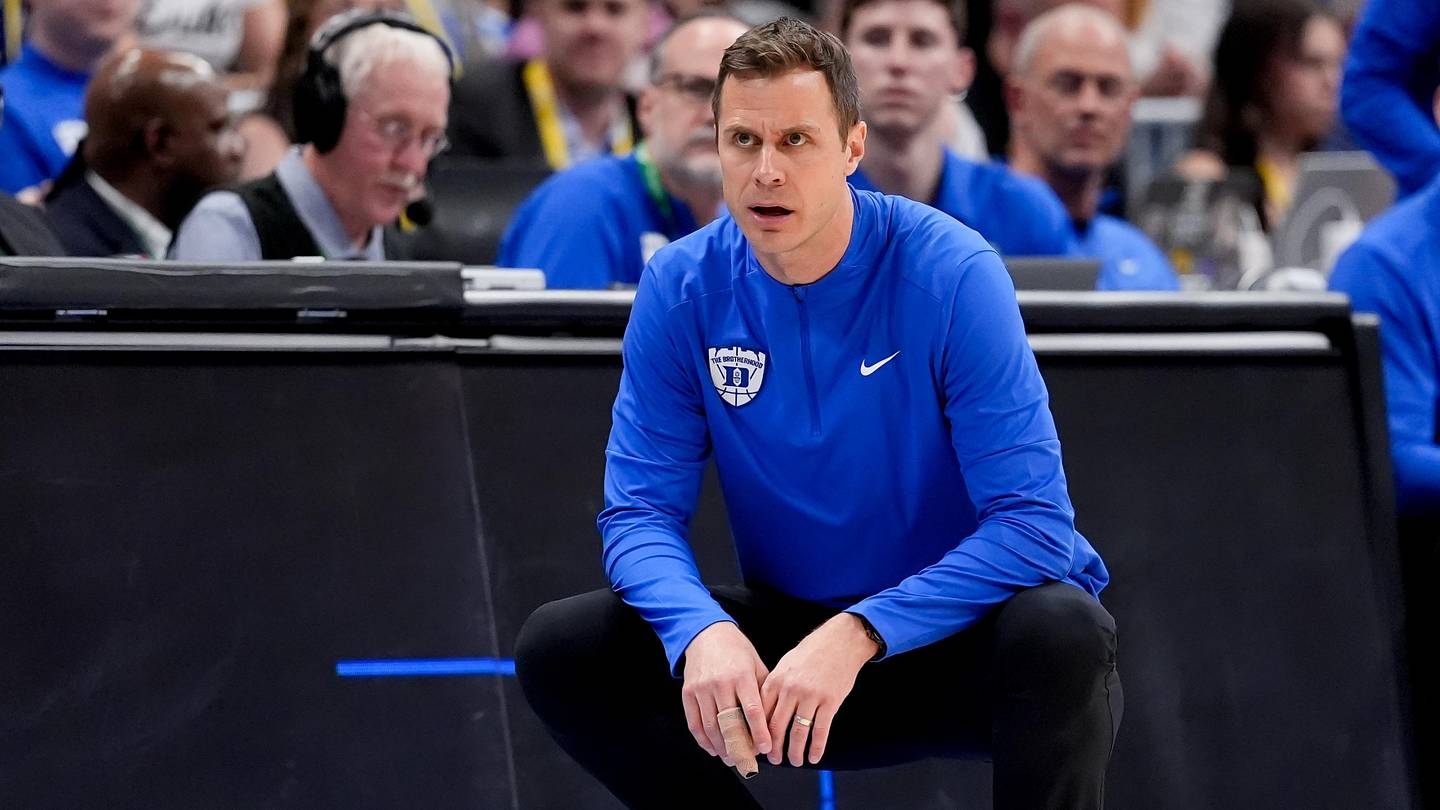
Yahoo Sports reports that the Dallas Mavericks refuse to close the door on the possibility of landing Duke head coach Jon Scheyer. This interest signals a fascinating intersection between one of the most prestigious programs in college basketball and a high stakes NBA franchise.
Scheyer has spent his recent years navigating the most difficult succession plan in sports history by following Mike Krzyzewski at Duke. His ability to maintain a high level of recruiting and competitive relevance has clearly caught the attention of professional executives.
Choosing to keep this door open suggests that the Mavericks are thinking beyond the immediate season. While the NBA coaching carousel often moves with predictable rhythm, the pursuit of a sitting Duke coach represents a major pivot in philosophy.
The Mavericks have traditionally leaned on former players or experienced NBA assistants to lead their bench. Moving toward a college coach would be a departure from that established path and would require a specific type of organizational buy in.
Jon Scheyer represents a younger generation of coaching talent that prioritizes communication and modern offensive concepts. In the current NBA, the gap between the professional game and elite college programs has narrowed in terms of tactical complexity.
Scheyer has shown a knack for managing high level talent and balancing the egos of future lottery picks. These are the same skills required to manage a locker room anchored by superstars like Luka Doncic and Kyrie Irving.
The relationship between the Dallas front office and the basketball world at large is deeply rooted in scouting and personal connections. General Manager Nico Harrison came to the Mavericks with a background that bridged the gap between corporate basketball interests and on court talent.
It is logical that his search for coaching excellence would extend into the elite levels of the Atlantic Coast Conference. The interest in Scheyer reflects a desire for a coach who understands the modern player and the leverage they hold in today's league.
There is an inherent risk in hiring any coach directly from the college ranks without significant NBA experience. History is filled with examples of successful NCAA coaches who struggled to adapt to the grueling schedule and the different power dynamics of the professional game.
However, the Mavericks appear to believe that Scheyer possesses the specific temperament to bridge that divide. His experience at Duke has already prepared him for a level of media scrutiny and fan expectation that rivals many NBA markets.
From a roster building perspective, a coach like Scheyer would need to implement a system that maximizes spacing and rim pressure. The Mavericks have built a team that thrives on the gravity created by their primary ball handlers.
Any new coaching philosophy would have to respect the existing chemistry while finding ways to improve the team's defensive ceiling. Scheyer's defensive schemes at Duke have often focused on disciplined rotations and protecting the paint, which are areas where Dallas has sought more consistency.
Keeping the door open on Scheyer also places a certain amount of pressure on the current coaching staff. In the NBA, the mere mention of a potential successor can alter the atmosphere within a facility. The Mavericks are essentially signaling that they are constantly evaluating their options for improvement. This approach ensures that no one within the organization becomes complacent during the long grind of the regular season.
Scheyer has a unique advantage because he is already accustomed to managing a program with massive financial resources and global visibility. The transition to a team with the profile of the Mavericks might be less jarring for him than it would be for a coach from a mid major program.
He understands how to navigate the expectations of boosters and owners who demand immediate results. In Dallas, those expectations are magnified by the presence of a championship window that will not stay open forever.
Speculation regarding the coaching position often overlooks the complexities of contract buyouts and timing. Scheyer is currently leading a program that expects him to be the face of their future for decades.
Prying him away from Durham would likely involve a significant financial commitment and a compelling vision for his role in the NBA. The Mavericks would need to offer him more than just a salary; they would need to offer him a seat at the table in terms of personnel decisions.
Lineup fit and player development are two areas where a coach with a college background can often excel. The Mavericks have several young pieces on their roster who could benefit from a developmental focus.
While the primary goal is to win titles now, sustaining success requires the constant refinement of role players. Scheyer has demonstrated an ability to identify the strengths of his players and put them in positions where they can contribute to a winning culture.
Trade value and salary slots are often the focus of NBA headlines, but the identity of the head coach is what defines a team's nightly performance. The Mavericks are looking for a leader who can provide a tactical edge in a Western Conference that is increasingly crowded with talent.
If the front office believes Scheyer is that person, they will continue to monitor his progress and maintain the lines of communication. The refusal to shut the door is a strategic move that keeps all possibilities on the table.
This interest also highlights the influence of the Duke pipeline in the professional ranks. Many former Blue Devils have gone on to have successful careers as both players and coaches in the NBA. This shared history creates a level of trust and a common language between the program and professional scouts. For the Mavericks, tapping into that pipeline could provide a fresh perspective on how to build a winning environment around their core stars.
As the season progresses, the performance of the Mavericks will ultimately dictate the timeline for any potential coaching changes. If the team exceeds expectations and makes a deep run in the postseason, the urgency to find a new leader may diminish.
Conversely, an early exit could accelerate the process and turn the Scheyer rumors into a concrete pursuit. The Mavericks are positioning themselves to be ready for either outcome by keeping their options wide and their evaluations ongoing.
Ultimately, the Mavericks are an organization that prizes innovation and high level talent in every department. Their interest in Jon Scheyer is a testament to his rising status in the basketball world and their own commitment to exploring every avenue for growth.
By refusing to close the door on such a high profile candidate, the franchise is making it clear that they are always looking for the next piece of the championship puzzle. The future of the Dallas sideline remains a fluid situation that will be shaped by the results on the court and the opportunities that arise in the coaching market.
 Dallas Mavericks