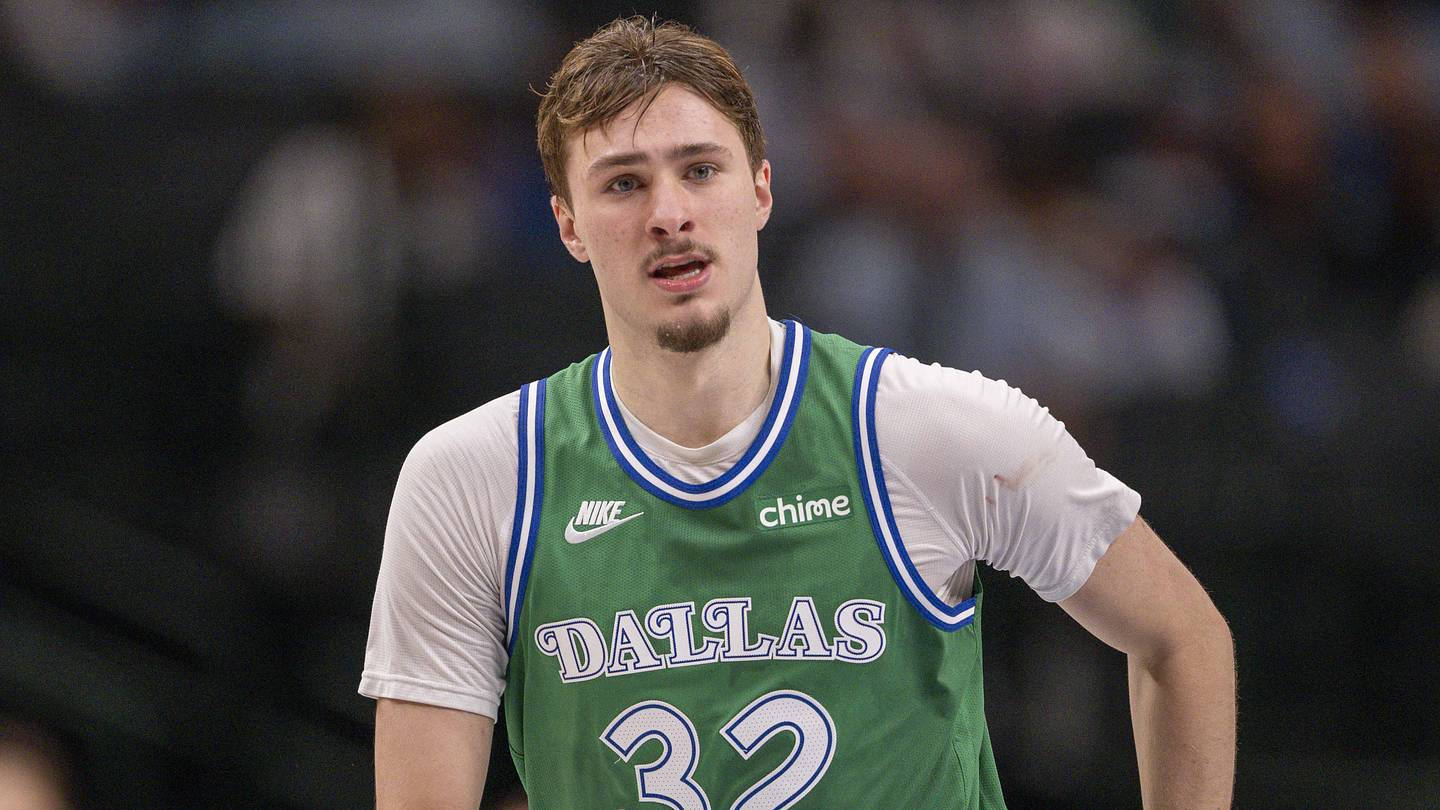
During a recent mock draft on Kevin O’Connor’s show, the Dallas Mavericks were shown selecting guard Kingston Flemings with the ninth overall pick. The segment immediately turned to a deeper question: who actually pulls the trigger for Dallas , longtime executive Masai Ujiri or the newly hired Mike Schmitz? O’Connor noted that the decision-making process itself has become a talking point across the league, with the organization’s hierarchy still shrouded in mystery.
Ujiri’s draft history provides a clue. Historically he has avoided small backcourt players, and the last guard of Flemings’ size he ever chose was Dalon Wright in the 2020s. That gap fuels speculation that Ujiri may defer the ninth-pick choice to another voice in the front office. O’Connor suggested a possible split, with Ujiri handling the top-nine selection while Schmitz could be tasked with the thirty-first pick, a slot that still offers significant upside.
Strategically, the Mavericks have flexibility beyond the ninth slot. O’Connor outlined a scenario in which Dallas could trade down to the twelfth pick with Oklahoma City, preserving the ability to acquire a player they value while gaining an additional asset. Even at twelve, the Mavericks could still target size-oriented prospects such as Nate Ament or Kareem Lopez, both of whom fit a different mold than Flemings. Retaining the thirty-first pick would give Dallas a valuable lottery slot to flip for a veteran contract or a developmental prospect.
If Flemings does land in Dallas, his lack of size could become an asset alongside lanky forward Cooper Flagg. O’Connor argued that defending a quick, burst-driven guard forces a defender to stay glued to the ball, limiting the ability to switch onto Flagg’s length-heavy post moves. The resulting mismatch could be used to force opponents into uncomfortable rotations, especially when Flemings screens for Flagg and then rolls to the rim. By contrast, a slower wing such as Keaton Wagler would allow seamless switches on Flagg screens, sacrificing speed for defensive simplicity.
The uncertainty surrounding the decision-maker underscores a broader question about the Mavericks’ evolving philosophy. Whether Ujiri, Schmitz, or a collaborative front office ultimately selects Flemings, the choice will signal how Dallas balances guard speed against front-court size, and whether it pursues a trade-down strategy to maximize draft capital. In a league where every lottery pick carries weight, the answer to “who’s calling the shot” could shape Dallas’ trajectory for years to come.
 Dallas Mavericks