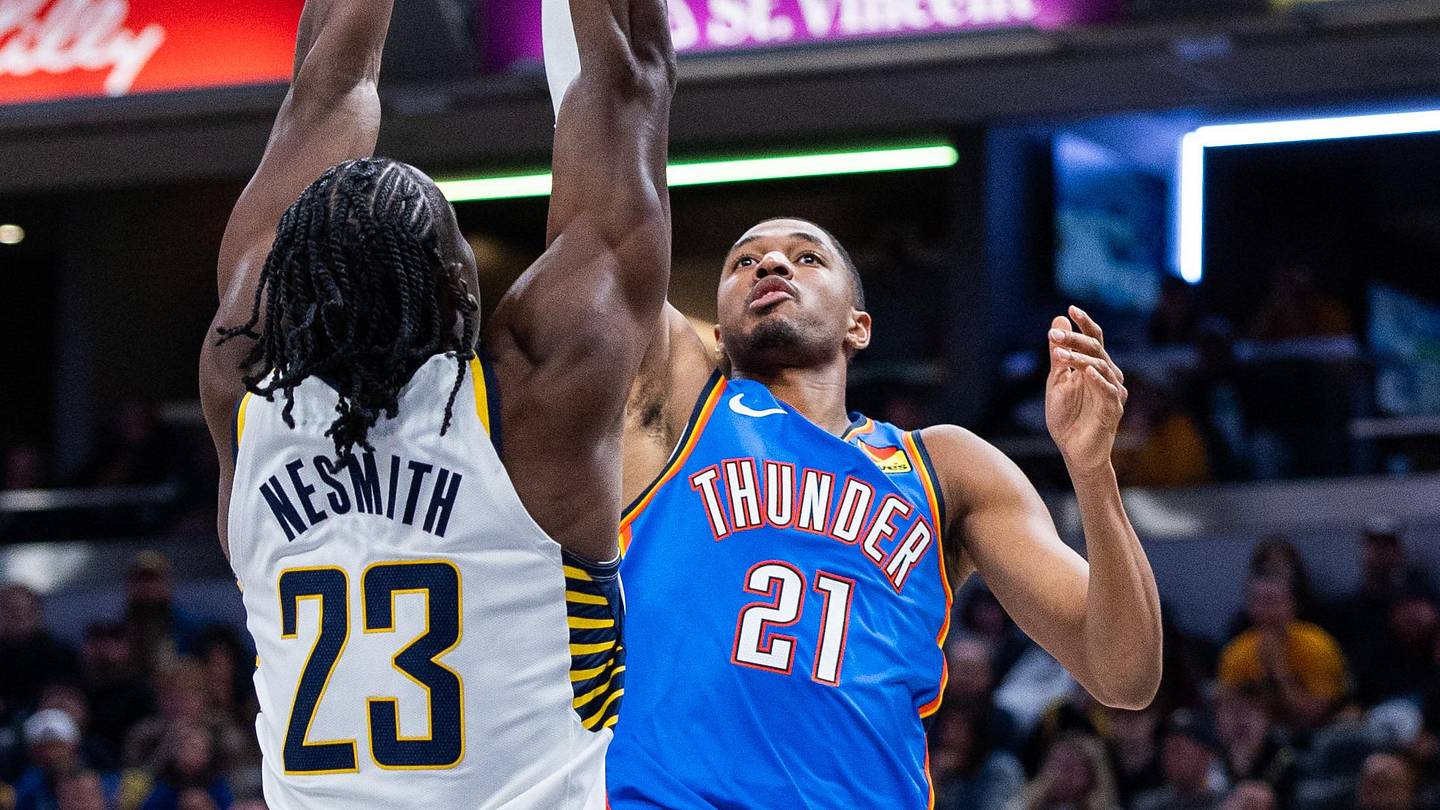
The Atlanta Hawks completed a Father's Day-evening transaction by acquiring shooting guard Aaron Wiggins from the Oklahoma City Thunder. In return, the Hawks surrendered a 2030 second-round pick and the less-favorable of the Lakers’ and Hawks’ 2032 second-round selections. The Thunder, meanwhile, cleared Wiggins’ contract from their books for the upcoming season, turning a roster move into a clear salary-dump.
Financially, the trade shaved a substantial amount off Oklahoma City’s projected luxury-tax bill. The Thunder entered the offseason facing a $213 million tax penalty; after the deal, that figure fell to $152 million, a reduction of $61 million. By moving a player who had become a reliable bench piece, the Thunder gained flexibility without surrendering major assets.
Wiggins, the 55th overall pick in the 2021 draft, has carved out a role as a productive reserve for Oklahoma City. Over his career he has shot 48.7 % from the floor and 38 % from three-point range, numbers that are especially valuable when the cost is two future second-round picks. His efficiency and experience as a bench scorer make him an attractive target for teams looking to add depth without sacrificing high-draft capital.
For the Indiana Pacers, the trade highlights an immediate need. With Bennedict Mathurin no longer on the roster, Indiana lacks a dedicated scoring wing off the bench. A player with Wiggins’ shooting profile could fill that void, providing instant offensive punch while preserving roster flexibility. The Pacers’ front office, known for cautious spending, can view this transaction as a template for acquiring similar value.
The Pacers could pursue a comparable approach by targeting undervalued veterans or young players who can be obtained for future second-rounders or modest trade exceptions. Such a strategy would allow Indiana to address a scoring deficiency without triggering additional luxury-tax exposure, keeping the team competitive while maintaining fiscal discipline.
As the NBA Draft approaches, Indiana holds multiple second-round picks that could be leveraged in trades or used to sign players like Wiggins. Replicating the Thunder-Hawks deal offers a roadmap: prioritize efficiency, minimize salary commitments, and retain the flexibility to maneuver in a cap-tight environment.

 Indiana Pacers