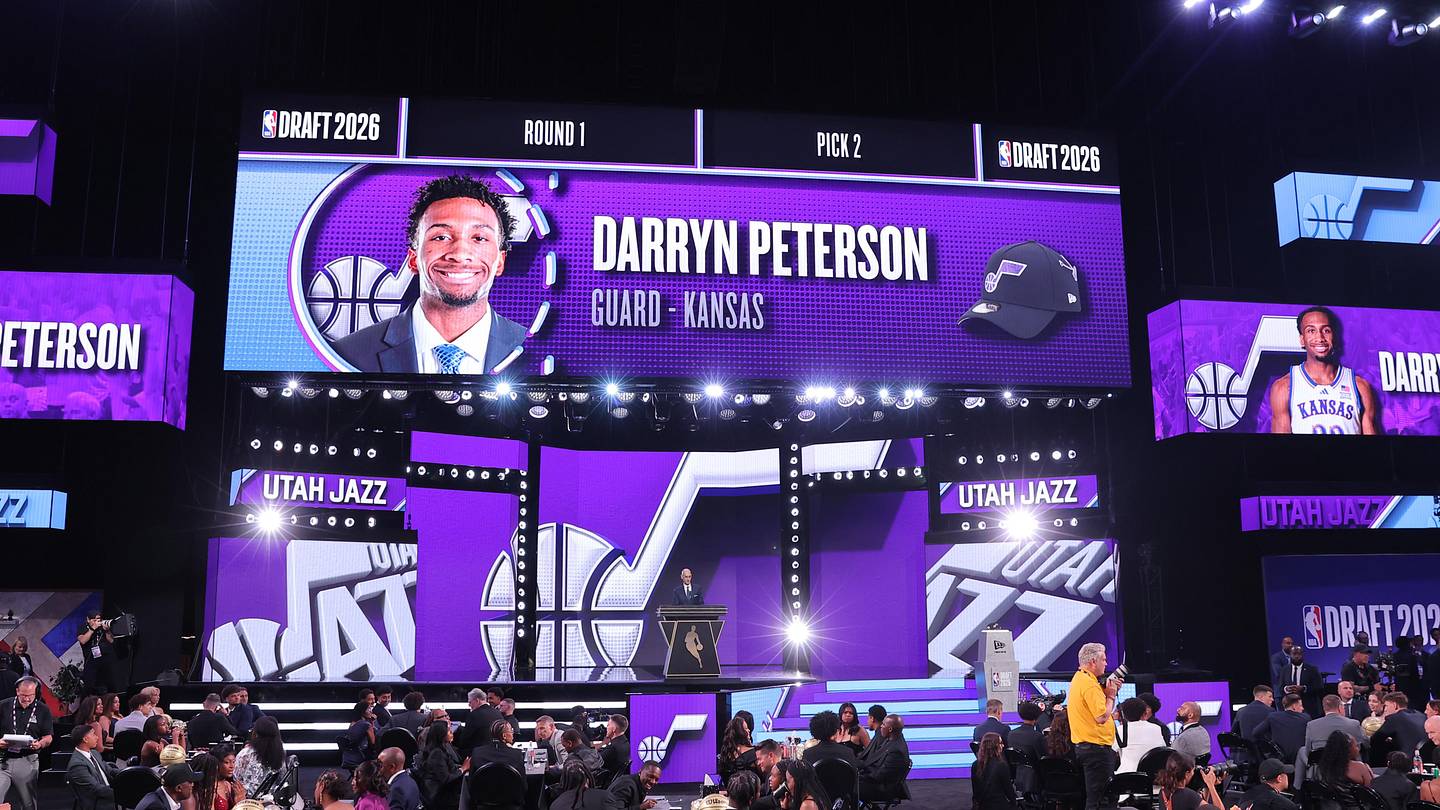
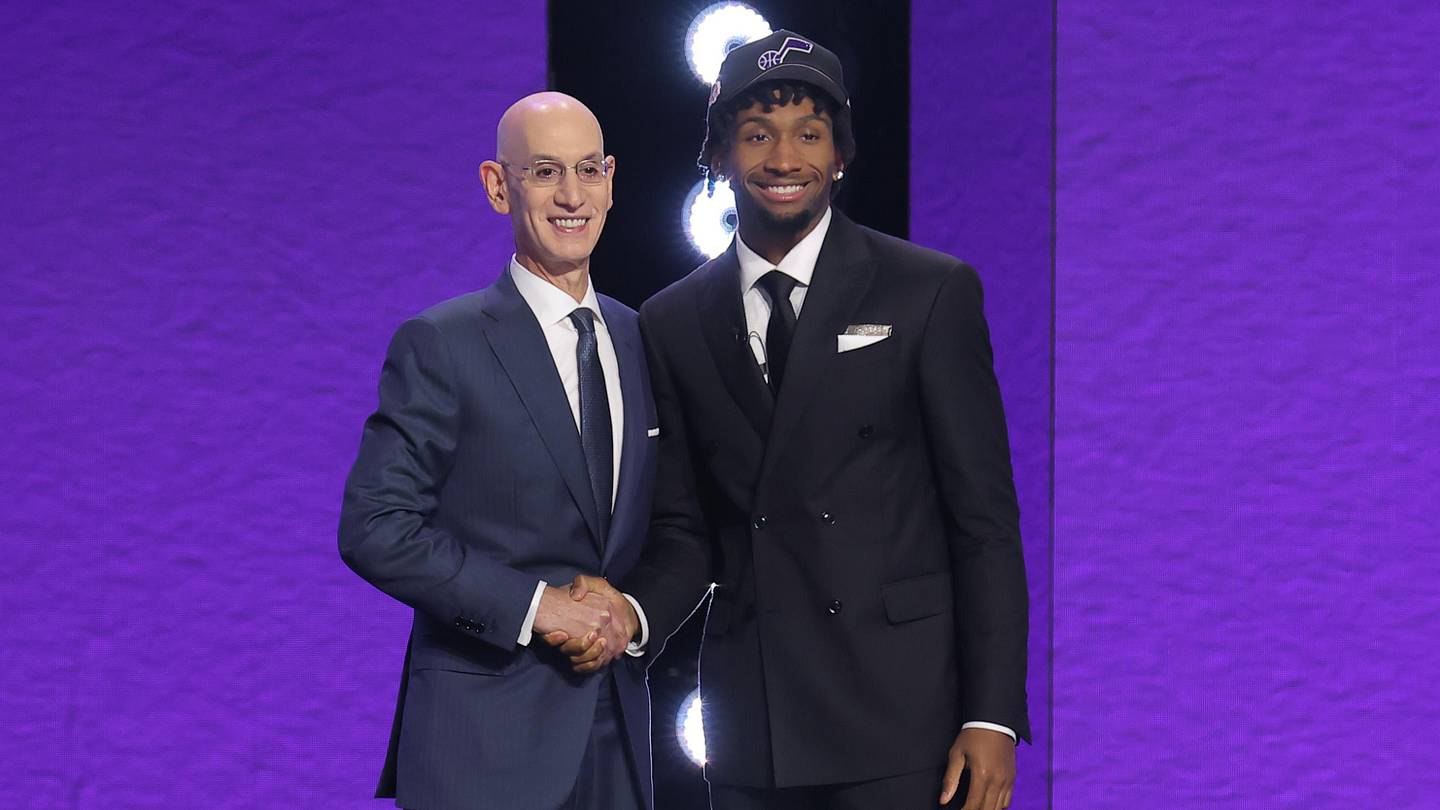
The introductory press conference for Darryn Peterson, the second overall pick in the 2026 NBA Draft, marked more than just the formal welcome of a new talent to the Utah Jazz. It represented a tangible step forward in an organizational reshaping, a deliberate choice etched onto the team's future roster.
The gathering at Zions Bank Basketball Campus, attended by Peterson alongside owner Ryan Smith and President of Basketball Operations Austin Ainge, underscored the significant weight this selection carries for the franchise and its ongoing pursuit of a competitive identity.
For a team navigating the complexities of player development and strategic acquisition, a number two overall pick is a foundational piece, a significant allocation of capital and faith. It is an investment not merely in a player's current abilities, but in his projected trajectory and his capacity to anchor a competitive vision for years to come.
Peterson’s arrival signals a deepening commitment to a specific blend of youth and skill, intended to evolve into a distinct team identity on the NBA landscape.
The discussions at the press conference, as reported by KSL Sports, highlighted key facets of Peterson's game that align with modern NBA demands. His "two-way game" was a point of emphasis, speaking to a player capable of impacting both ends of the floor with equal measure.
This attribute is increasingly vital in a league where positional versatility, defensive accountability, and the ability to contribute without relying solely on offensive outbursts are paramount.
A true two-way player offers more than just statistical contributions; they provide crucial flexibility in defensive schemes. Such a player can often guard multiple perimeter positions, switch effectively onto different assignments, disrupt passing lanes with active hands, and contest shots at the rim when rotating.
This comprehensive defensive capability alleviates pressure across the roster, allowing coaches to deploy varied lineups without sacrificing defensive integrity against diverse offensive threats. On offense, a two-way player often contributes through efficient scoring, off-ball movement, and transition opportunities.
Peterson's stated "playmaking ability" further enhances his potential impact, particularly as the Jazz build out their long-term roster. In today's offense, the capacity for multiple players to initiate action, create advantages, and distribute the ball effectively is invaluable.
Over-reliance on a single primary ball-handler can make an offense predictable and easily stifled by sophisticated opposing defenses, limiting overall lineup flexibility.
A player who can consistently make sharp reads, deliver accurate passes, and break down defenses off the dribble adds layers of complexity and unpredictability to an offensive scheme. This skill set can lead to better spacing for shooters, more dynamic ball movement through multiple hands, and the potential for greater offensive efficiency by exploiting defensive rotations.
Such a player could serve as a valuable secondary or even primary initiator, depending on the specific lineup construction and game flow.
The specific mention of his "fit alongside Keyonte George and the Jazz's young core" is particularly illuminating, offering a window into the team's strategic blueprint. This phrasing suggests a clear internal vision for how Peterson integrates into the existing, developing talent on the roster, implying a deliberate and complementary pairing designed to maximize the collective output of these young players.
This isn't just about accumulating talent, but about assembling harmonious skill sets.
If Peterson can competently handle significant ball-handling duties and create scoring opportunities, it could potentially free George to operate more off-ball, leveraging his shooting prowess and cutting abilities without the constant burden of initiation. This division of labor allows both players to maximize their strengths.
Alternatively, it could allow George to conserve energy on offense by sharing playmaking responsibilities, enabling him to commit more fully on the defensive end where his size and effort can be impactful. This kind of nuanced synergy is essential for cohesive backcourt development in the modern NBA.
The Jazz's "young core," while not explicitly detailed in the source, inherently represents a collection of players still finding their professional footing and defining their roles. The addition of a talent like Peterson, particularly one with a described two-way profile and playmaking instincts, can help solidify individual roles and define the collective identity of this burgeoning group. It signals a move towards a specific style of play.
His presence might influence the types of players the Jazz seek in future acquisitions, emphasizing complementary skills that enhance what Peterson and George offer in terms of spacing, rim pressure, and defensive versatility. It can also shape the offensive and defensive schemes implemented by the coaching staff, building around the strengths and interconnectedness of their highest-drafted talents rather than forcing square pegs into round holes.
This impacts everything from cap holds to trade value for other assets.
Owner Ryan Smith and President of Basketball Operations Austin Ainge's presence at the press conference, as noted by KSL Sports, signals a unified organizational front behind this selection. Such high-level attendance for an introductory event is not uncommon for a top pick, but it consistently reinforces the importance placed on the player by the entire franchise, from ownership down.
It indicates a clear alignment on strategy and player evaluation.
Their shared vision for the team's direction is implicitly endorsed by this pick. The decision to select Peterson at number two overall, with his specific skill set emphasizing versatility and creation, reflects a calculated move to acquire a player archetype they believe is central to their long-term competitive aspirations.
This isn't merely adding talent; it's adding *specific* talent to fit a predetermined strategic framework, signaling a focused approach to roster construction.
Peterson's journey from Kansas to the professional ranks, though not detailed in the source beyond the mention of his background, is a common narrative for young prospects. The transition from amateur basketball to the NBA brings with it immense challenges, from adapting to a faster pace of play and more complex defensive schemes, to adjusting to the physical demands of a rigorous 82-game schedule.
Every top draft pick faces this intense crucible of development.
The expectations placed on a number two overall selection are inherently immense, amplified by the significant leverage a high pick holds within a team's future plans. Fans and analysts alike will scrutinize every minute, every shot, and every decision Peterson makes in his early career.
Managing this intense external pressure, while simultaneously continuing to develop and refine his game against the world's best, will be a critical aspect of his early professional career. The organization's consistent support and a clear developmental pathway will be crucial for his long-term success.
The Jazz are clearly charting a course with specific player archetypes in mind, prioritizing versatility, multi-faceted skill sets, and cohesive lineup fit. Darryn Peterson's introduction as the second overall pick is far more than a simple roster addition; it is a significant, tangible step in defining Utah's future on the court, shaping both the immediate and long-term trajectory of the franchise as they build towards sustained competitiveness and increased fan stakes.
 Utah Jazz