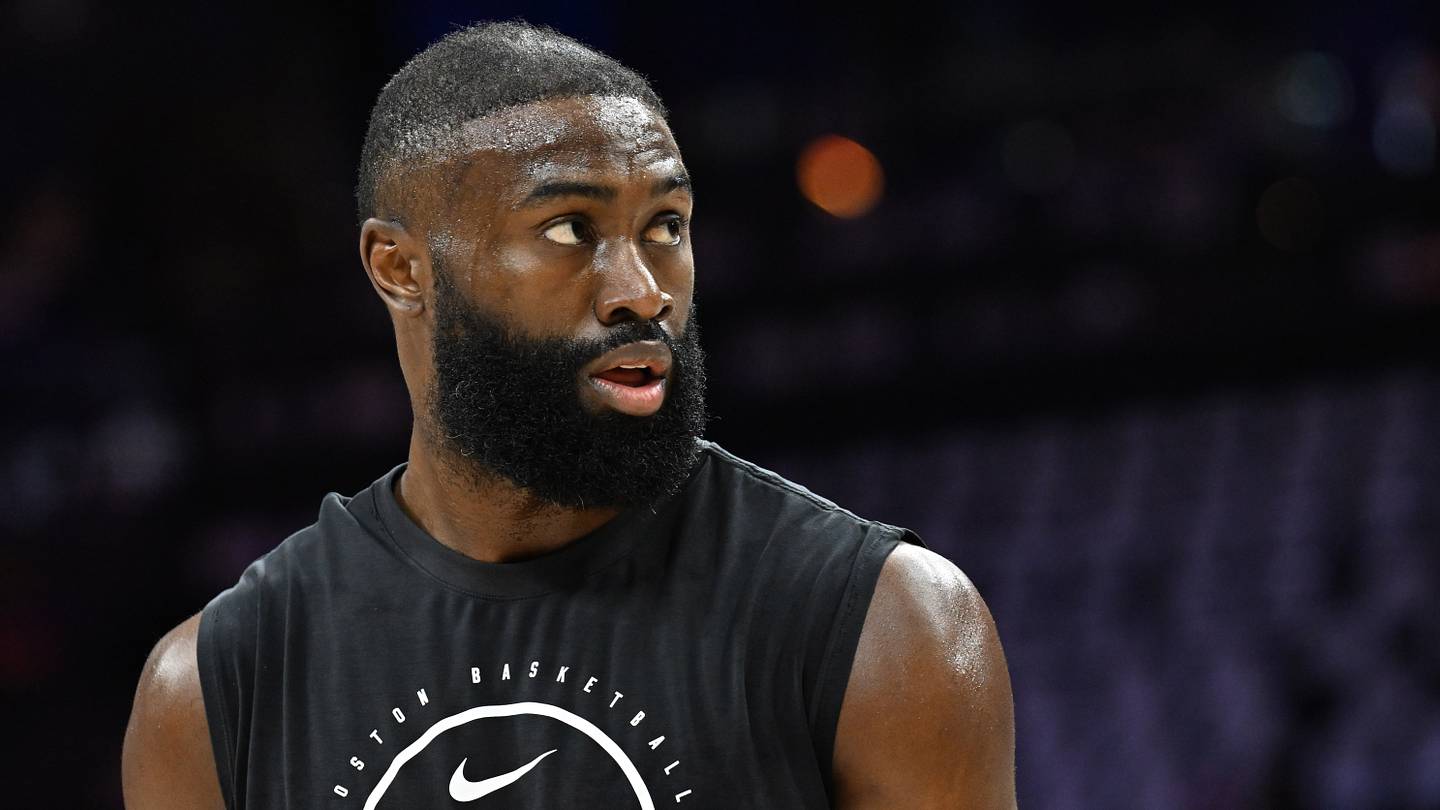
The shifting landscape of NBA player movement often presents teams with inflection points, moments that can fundamentally alter their trajectory. For the Brooklyn Nets, the recent trade of Jaylen Brown from the Boston Celtics to the Philadelphia 76ers for what Sports Illustrated described as “pennies on the dollar” represents one such moment, not for what they gained, but for what they seemingly opted not to pursue.
The Celtics’ decision to move Brown, an All-NBA talent, for a surprisingly modest return set off ripples across the league. It highlighted the unpredictable nature of trade markets, where perceived value does not always align with actual transaction prices. This particular deal underscored the fine line between strategic patience and missed opportunity in the relentless pursuit of contention.
Critically, a hypothetical package from the Nets, involving Michael Porter Jr. and two first-round picks, was understood to have “blown the Sixers' package out of the water.” Such a robust offer would have presented Boston with a significantly more appealing path for asset accumulation. The sheer disparity in proposed value raises questions about why Brooklyn never fully engaged.
Despite being in a “strong position to make a play for Brown,” the Nets reportedly were never in “deep conversations” with Boston. This detachment from a prime opportunity suggests a deliberate strategic choice, rather than a lack of assets or interest. It points towards a specific philosophy guiding General Manager Sean Marks and the team's front office.
Marks has alluded to the team's “flexibility,” a term that can imply various approaches, from maintaining cap space to preserving draft capital. In the wake of the Brown trade, this flexibility appears to be less about chasing every available star and more about a calculated, perhaps more patient, roster construction.
This measured approach now brings other names into focus for Brooklyn, players who might better align with a long-term vision. Among these, Trey Murphy III has emerged as a compelling target, fitting a profile distinct from the high-usage, star-power archetype that Brown represents.
Murphy, at 26 years old, offers a blend of attributes that directly address the Nets’ needs. He would bring an “influx of athleticism and solid perimeter defense” to a roster that could certainly utilize both, according to reports. His capacity for active, two-way play aligns with the evolving demands of modern NBA schemes.
Beyond defense, Murphy’s offensive contributions are equally relevant. His “solid 3-point shooting” would provide crucial spacing, and his ability to “push the pace” would inject vitality into the Nets’ offense. He consistently finishes plays off timely assists, a trait that would complement potential playmaking from future talents like Egor Dëmin, Mikel Brown Jr., and Nolan Traoré.
New Nets coach Jordi Fernández is known for preferring an offense built on “more ball movement and less isolation sets.” This strategic shift under Fernández makes Murphy an especially attractive fit, as his game naturally thrives within such a free-flowing, collaborative system. His profile is less about creating in isolation and more about efficient, complementary production.
Murphy's age, firmly within his athletic prime and with room for further development, makes him an “excellent fit for the Nets' future timeline.” This focus on age and developmental curve suggests a commitment to building a cohesive, ascending core rather than a collection of disparate star talents.
The broader league context also plays a role in identifying potential targets. The Utah Jazz, for instance, are “loaded with young talent,” featuring a crowded rotation that includes Darryn Peterson, Keyonte George, Jaren Jackson Jr., Lauri Markkanen, and Brice Sensabaugh. This abundance of young assets can create both opportunities and challenges for a rebuilding team.
In such a crowded environment, a player like Ace Bailey may find himself operating “off the bench” or in a “very limited role.” For a developing talent, this lack of opportunity could potentially lead to frustration, opening a window for teams like the Nets to explore trade possibilities for players seeking a clearer path to playing time and responsibility.
The dynamic of a talent-rich team like Utah, where roster spots and minutes are at a premium, presents a landscape the Nets can potentially leverage. Instead of competing for established stars, Brooklyn might find value in players squeezed out of a deep rotation, offering them a more prominent role.
The discussions surrounding Jaylen Brown’s career performance, particularly the sentiment regarding his on-off net rating across ten years, might have contributed to a cautious market. While Brown is undeniably talented, the perceived fit and the cost in terms of assets and salary slots may have influenced various teams' decisions to keep their main assets off the table.
Reports indicated that multiple teams, including Charlotte, Denver, Philadelphia, and Houston, refused to trade their primary young talents or star players for Brown. This widespread reluctance to part with core assets for even a player of Brown’s caliber illustrates a market less inclined to make an all-in move, even for a star.
The Nets' decision to prioritize players like Murphy, who align with a specific system and timeline, suggests an understanding that team-building extends beyond acquiring the biggest name available. It is about creating a synergistic unit, where individual talents elevate the collective.
By not engaging deeply in the Jaylen Brown sweepstakes, the Nets signaled a commitment to their own vision, one that values specific role players and developmental potential over perceived immediate star power. Their flexibility is not merely about optionality, but about the careful selection of pieces that fit a defined strategic puzzle.
The path ahead for the Brooklyn Nets is one of deliberate construction, informed by a refusal to chase every high-profile opportunity. Their next moves will further define this philosophy, highlighting whether patience and precise role acquisition can ultimately yield a more resilient and competitive foundation.
 Brooklyn Nets