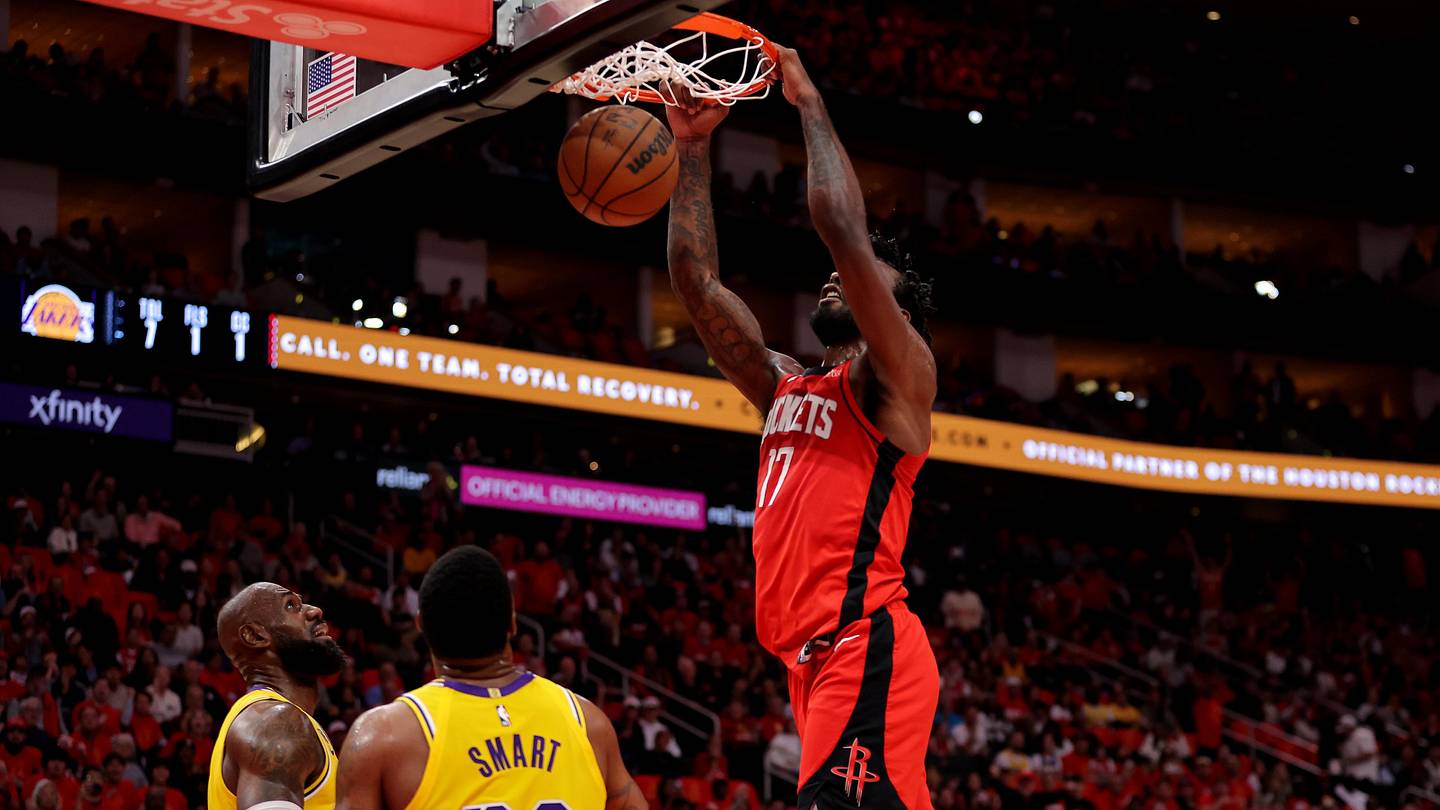
The Houston Rockets approach a pivotal offseason, their organizational direction shrouded in an intriguing uncertainty. After seasons spent cultivating young talent and acquiring future assets, the club now faces critical decisions that will define its immediate competitive trajectory. These choices, aimed at significant improvement, could manifest in surprising roster adjustments.
Amidst this landscape of potential change, a familiar and somewhat unexpected name has emerged in discussions surrounding Houston’s future. Scott Polacek, writing for Bleacher Report, recently identified the Rockets as a possible destination for free agent guard Russell Westbrook, a former NBA MVP who previously played for the team during the 2019-20 season. This suggestion immediately injects a complex layer into Houston’s strategic planning.

Polacek’s analysis frames Westbrook as a potential solution to specific, identified needs within the Rockets’ current roster. The team reportedly seeks to bolster its bench unit, which last season often lacked the consistent offensive firepower required to sustain leads or ignite comebacks. Such a void on the second unit is a common challenge for developing teams looking to take the next step.
Beyond general bench scoring, the Rockets also reportedly encountered a shortage of reliable ball-handlers and offensive initiators. In critical moments, or against disciplined defenses, a team without multiple players capable of breaking down a defense and creating opportunities can stagnate. This particular deficiency points directly to one of Westbrook's career-long strengths.
During the 2025-26 NBA season with the Sacramento Kings, Westbrook showcased that he can still be an impactful contributor in a defined role. He averaged 15.2 points, 6.7 assists, 5.4 rebounds, and 1.3 steals across 29.0 minutes per performance. These numbers reflect a player who, even as his career progresses, maintains a high level of activity and statistical production across multiple categories.
Polacek specifically highlighted Westbrook’s continued ability to attack the basket, a skill that can generate rim pressure and force defensive rotations. This aggressive downhill presence, coupled with his reputation for strong rebounding from the backcourt, offers immediate value. Such attributes align with the identified areas where Houston seeks to upgrade its capabilities.
Furthermore, Westbrook’s willingness to get out in transition, pushing the pace and drawing multiple defenders, could significantly benefit Houston’s perimeter shooters. His drives collapse defenses, opening up looks on the wing for teammates. This dynamic offensive engine, even in bursts, could alleviate pressure on other primary creators and provide crucial spacing opportunities.
However, any potential reunion would necessitate a careful consideration of Westbrook’s evolving game and the concerns associated with it. Polacek acknowledged ongoing questions regarding Westbrook’s shooting efficiency, his turnover rate, and his overall usage rate. These factors are precisely why, as Polacek noted, “no contender is going to make the 2016-17 MVP a centerpiece of their offense next season.”
For Houston, this means Westbrook’s integration would demand a disciplined approach to his role and minutes. His value would likely come from leading a second unit, providing a burst of energy and creation, rather than being a primary offensive focal point for significant stretches. The fit would depend on his willingness to embrace a role that prioritizes efficiency and playmaking over high-volume scoring.
The Rockets’ status as a “wildcard” this offseason underscores the unpredictable nature of their decisions. Are they pursuing a veteran presence to mentor their young core, or are they seeking more immediate, tangible on-court results? A move for Westbrook would signal a desire for immediate impact and a more competitive outlook, potentially accelerating their timeline for contention.
The fan stakes surrounding such a move would be considerable. Westbrook’s previous stint in Houston, while statistically productive, ended with a trade. The memory of that era, and the expectations that accompanied it, would undoubtedly color reactions to a potential return. Navigating these sentiments, alongside the on-court fit, presents a unique challenge for the front office.
Acquiring a free agent like Westbrook, particularly one with a defined skill set and known attributes, requires a strategic understanding of roster composition. His role as a ball-handler and initiator could ease the burden on younger guards still developing their offensive games. It could also provide a veteran voice in the locker room, albeit one with a very specific playing style.
The calculus for the Rockets involves weighing the immediate offensive boost and veteran presence Westbrook offers against the potential challenges of integrating his unique game. His ability to facilitate and create, especially in transition, could be a valuable asset for a team looking to improve its offensive flow and reduce stagnant possessions.
Conversely, managing his shooting efficiency and turnover tendencies within a team structure that already features developing players would be paramount. The balance between allowing Westbrook to leverage his strengths and ensuring he complements the existing talent, rather than overshadowing it, would be a delicate act for the coaching staff.
The financial implications, while not detailed in specifics, would also play a role in this calculus. As a free agent, Westbrook’s contract would need to fit within Houston’s cap space and align with their broader long-term financial strategy. The perceived value and duration of a potential deal would speak volumes about the organization’s commitment to an accelerated competitive window.
A reunion with Westbrook, therefore, is more than just adding a veteran player; it represents a philosophical choice for the Rockets. It signifies a potential shift towards incorporating proven, albeit specialized, talent to shore up weaknesses. This move could provide a clear indication of how aggressively Houston intends to pursue wins in the upcoming season.
If Westbrook were to join the Rockets, his primary impact would likely be felt in the second unit. His ability to run a pick-and-roll, penetrate defenses, and find open shooters could transform the bench’s offensive output. This increased offensive thrust would ideally allow the starters to maintain their rhythm and avoid significant drop-offs when rotations begin.
Ultimately, the consideration of Russell Westbrook as a potential free agent target encapsulates the Rockets' current offseason dilemma. The organization seeks improvement, but the path to achieving it involves complex choices regarding role definition, financial flexibility, and the integration of diverse skill sets. How Houston navigates these decisions will reveal the true nature of their competitive aspirations.
 Houston Rockets