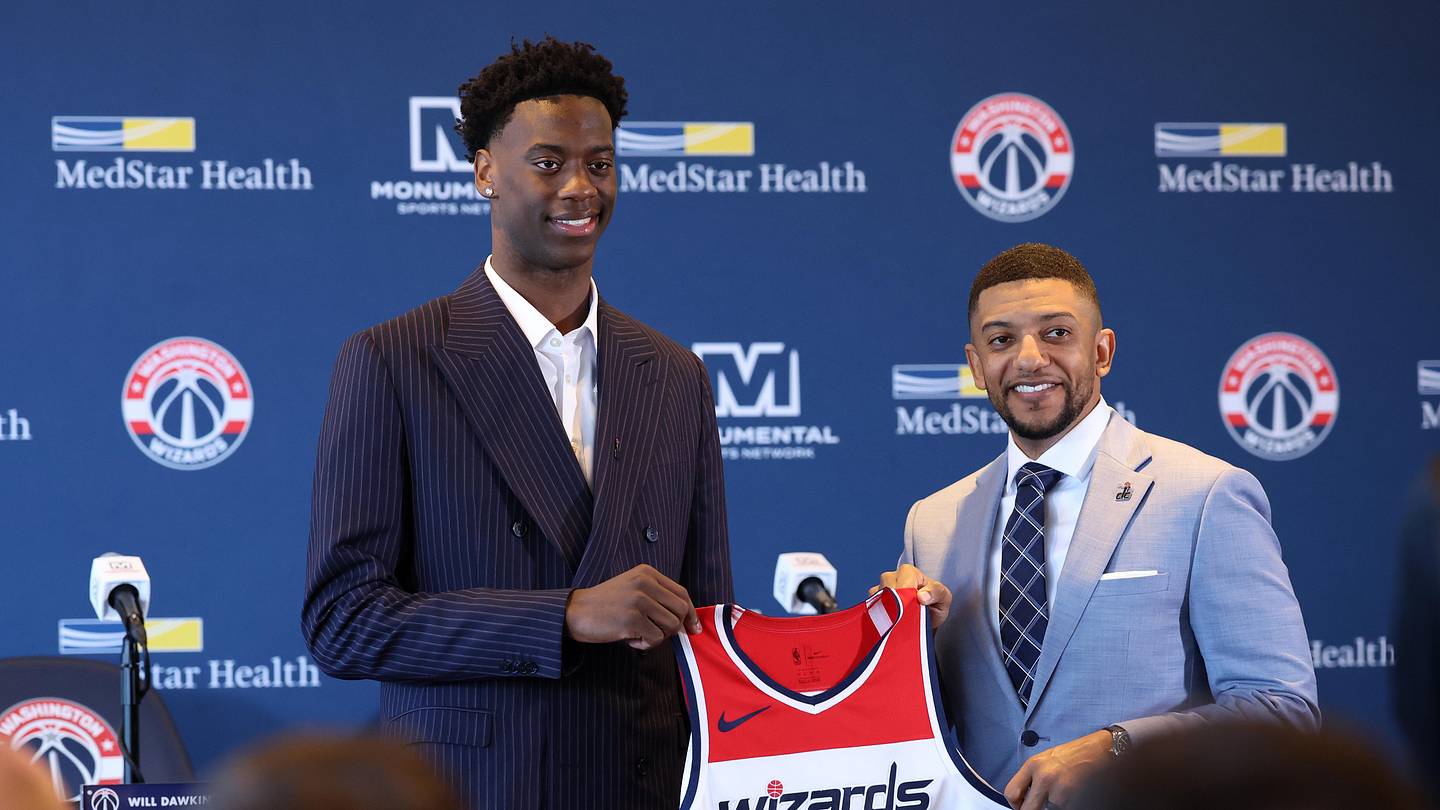
For any undrafted player, the path to an NBA roster spot is a gauntlet, a high-stakes audition played out under the bright lights of Summer League with little margin for error. Seth Trimble, the latest addition to the Washington Wizards’ developing roster, now faces this exact crucible.
His signing as an undrafted free agent marks not an arrival, but the beginning of an uphill climb to prove his professional viability in a league that demands specialized skills.
Trimble arrives in Washington after a collegiate career at North Carolina where he demonstrated steady progression. Each season brought measurable improvements, culminating in career highs during his final year for points, assists, and minutes played. This consistent upward trajectory is often a strong indicator for evaluators looking beyond raw talent.
His efficiency also saw a notable bump, with his field goal percentage reaching a personal best of 47.1 percent as a Tar Heel. Beyond the statistics, Trimble earned a reputation as a leader, both on the court and within the locker room. He displayed a willingness to embrace crucial moments, notably connecting on a game-winner against Duke, showcasing a competitive edge.
On the offensive end, Trimble’s primary weapon is his ability to attack the basket. He is described as a strong driver, possessing the athleticism to navigate traffic and finish effectively at the rim. In today’s NBA, where rim pressure and collapsing defenses are valued, this skill set offers a clear pathway to impact.
Defensively, Trimble is considered a decent individual defender, with the potential to elevate that aspect of his game significantly. The source reporting suggests that if becoming a “lockdown” defender became his singular focus, it is an achievable goal. For an undersized guard, defense often becomes the most direct route to earning minutes and carving out a sustainable role.
However, Trimble’s physical profile presents an immediate challenge. Standing 6’3”, he is considered small for an off-ball guard in a league increasingly trending towards positional size and versatility. This height disadvantage can limit his effectiveness against larger opponents and potentially restrict the types of defensive assignments he can consistently take.
Compounding this is his career three-point shooting, which hovers around 29.4 percent. This mark significantly hampers his potential as a “3 and D” player, a coveted archetype in the modern game. Without a reliable outside shot, his ability to space the floor and punish defenses off the catch remains a significant question mark.
Additionally, his free throw shooting has been inconsistent throughout his college career, generally hovering around 66 percent, with an outlier junior season at 82 percent. For a guard who relies heavily on driving to create offense, this makes him susceptible to opponents intentionally fouling him, especially in critical game situations.
Trimble is entering a Washington Wizards organization that has struggled profoundly in recent years. The team has posted a losing record in each of the past five seasons, accumulating a disappointing 120-290 record. This consistent lack of success has also resulted in the Wizards securing a top-10 draft pick in each of those five seasons, including two top-five selections.
Despite the high draft capital, the Wizards remain in a deep rebuild, a situation some have likened to the perennial struggles of the Cleveland Browns in the NFL. This environment, while potentially offering more opportunity for unproven players, also means a high degree of roster churn and intense competition for limited spots.
The Wizards’ current roster composition further complicates Trimble’s immediate prospects. The team is noted as being “full of smaller guards,” a group that includes their first-round pick from last season, Tre Johnson. This creates a crowded depth chart at the guard position, forcing Trimble to directly compete with players who already have a leg up in the organization.
The team’s recent trade acquisitions, including Anthony Davis and Trae Young last season, were perhaps intended to signal a shift towards competitiveness. However, these moves have yielded minimal on-court impact for Washington, with Young playing five games and Davis none. This situation underscores the team's ongoing search for stability and talent.
The specific nature of Trimble’s undrafted free agent contract remains undisclosed, whether it is a two-way deal, an Exhibit 10, or purely a Summer League agreement. This uncertainty adds another layer to his challenge, as each contract type carries different implications for his immediate future and pathway to the main roster. His performance in Summer League will be paramount in determining the next step.
Summer League is a critical proving ground, and a successful showing there could lead to a G-League contract, similar to what former Tar Heel RJ Davis secured with the South Bay Lakers. This would allow Trimble to continue his development within the Wizards’ system, refining his perimeter shot and decision-making against professional competition.
Ultimately, making the 15-man roster is described as an “uphill battle” for Trimble. His calling card, defense, will be his most valuable asset, potentially carving out a niche even as an undersized guard. The Wizards' dire need for competent two-way players offers a sliver of hope, but the margin for error for an undrafted signee is razor-thin.
Seth Trimble's journey with the Washington Wizards begins with the harsh realities of NBA roster construction. His capacity to overcome physical limitations, develop a consistent jump shot, and leverage his defensive potential in a crowded backcourt will dictate whether this Summer League opportunity blossoms into a long-term professional career or simply remains a brief, intense audition.

 Washington Wizards